Blog

  • How Disposable Emails Work

    How Disposable Emails Work

    Disposable emails are temporary, throwaway email addresses that self-destruct after a short time or a few uses. They work by routing messages through a public, anonymizing server, shielding your real inbox from spam and data harvesters. Perfect for one-time sign-ups or testing, they are a vital tool for digital privacy, but come with important limitations you must understand before use.

    Ever felt that pang of hesitation when a website asks for your email address? You want the free guide, the discount code, or to just read that one article, but handing over your primary email feels like opening your front door to a stranger who might never leave. This is the exact problem disposable email services were built to solve. But how do they actually work? It’s not magic, but a clever, simplified system designed for one thing: temporary, anonymous communication. Let’s pull back the curtain and understand the mechanics, the benefits, and the crucial caveats of these digital smoke bombs.

    Key Takeaways

    • Core Function: Disposable emails act as a protective shield, creating a temporary middleman address that forwards mail to your real inbox (or displays it on a web page) without revealing your identity.
    • Anonymity Through Public Inboxes: They rely on publicly accessible, shared inboxes where anyone can view messages sent to a specific random address, eliminating the need for account creation or passwords.
    • Primary Use Case: Their main job is to combat spam and prevent your primary email from being sold to marketers or compromised in a data breach during low-trust online interactions.
    • Not for Critical Accounts: Never use them for banking, primary social media, or any account where password recovery or long-term access is essential; you will lose access permanently.
    • Security vs. Privacy: They offer privacy (hiding your identity) but generally not security (encryption), as messages are often stored in plain text on a shared server accessible to others.
    • Limited Lifespan: These addresses have a built-in expiration, typically ranging from 10 minutes to 48 hours, after which the inbox and all contained messages are permanently deleted.
    • Detection is Common: Many websites actively block known disposable email domains to prevent abuse, so they won’t work everywhere.

    The Fundamental Concept: A Public, Shared Inbox

    At its heart, a disposable email service is incredibly simple. Unlike Gmail or Outlook, which create a unique, password-protected inbox just for you, a disposable email service creates a unique, public inbox. Think of it less like a locked mailbox at your house and more like a glass display case in a busy town square. Anyone who knows the specific, randomly generated address (e.g., [email protected]) can walk up, look inside, and read any message placed there.

    No Accounts, No Passwords, No History

    The revolutionary simplicity is in the lack of setup. You don’t register. You don’t choose a password. There is no “log in.” You simply visit the disposable email provider’s website, and it instantly generates a random email address for you. That’s it. The inbox for that address is already created and waiting on their server. You see the address on your screen, and you can start using it immediately. The service’s server is configured to accept any incoming mail for any address on its domain and display it on a web page linked to that specific random string of characters.

    The Step-by-Step Journey of a Disposable Email

    Let’s trace the lifecycle of a typical disposable email, from creation to deletion, to see exactly where your data goes—and where it doesn’t.
    How Disposable Emails Work

    Visual guide about How Disposable Emails Work

    Image source: funkyspacemonkey.com

    Step 1: Generation & Receipt

    You visit a site like Temp-Mail.org or 10MinuteMail.com. The service instantly presents you with an address, say, [email protected]. You copy this and paste it into a forum’s registration form. When the forum sends a confirmation email, it doesn’t go directly to you. It goes to the mailsac.com server.

    Step 2: Server Processing & Display

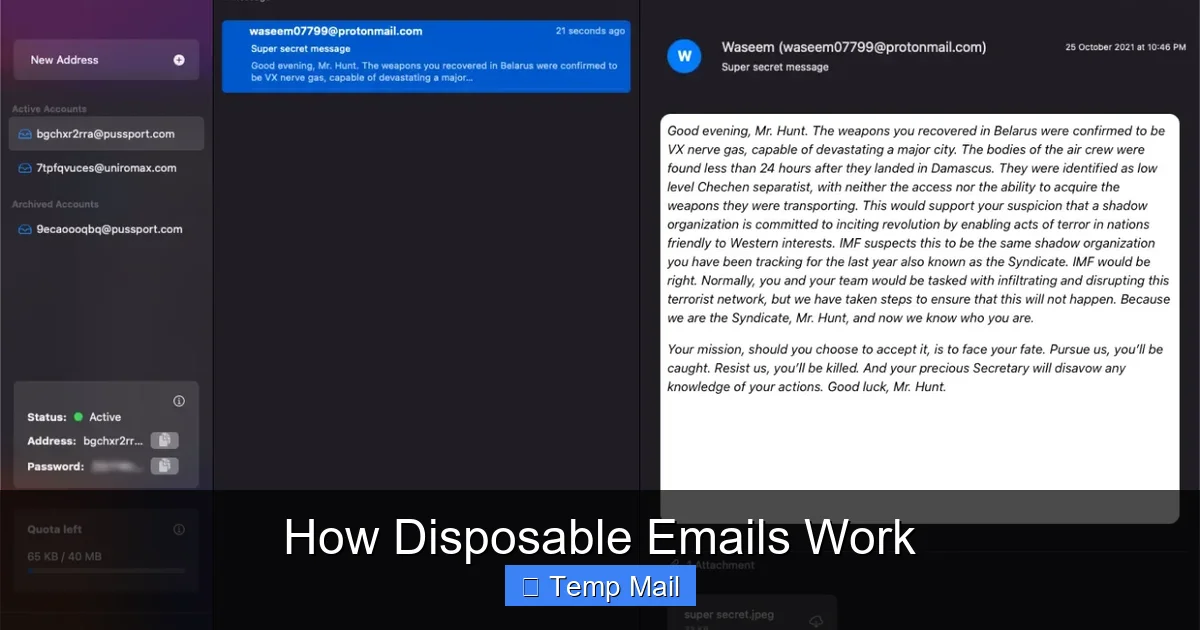
    The disposable mail server receives the email. Because the recipient is x7f9q2 (a valid address on its system), it doesn’t reject it. It doesn’t try to forward it anywhere else. Instead, it stores the email in a database, tagging it with that unique address string. Meanwhile, on your browser tab open to the disposable email site, a script is constantly refreshing or polling the server, asking, “Any new mail for x7f9q2?” When the email arrives, the server sends it to your browser, and it appears in the inbox window.

    Step 3: Access & Potential Forwarding

    You see the confirmation email, click the link, and you’re verified. Some advanced disposable services offer a temporary “forwarding” feature. You might be able to enter your *real* email address into a field on their site, and they will forward any incoming messages from the disposable address to your real inbox for a limited time. This adds a layer of convenience but also means the service now has a link between the disposable address and your real one, slightly reducing anonymity.

    Step 4: Automatic Expiration & Wipe

    This is the core “disposable” mechanic. A timer starts as soon as the address is generated. After 10 minutes, 1 hour, or 24 hours (depending on the service), the system automatically executes a purge. The database entry for x7f9q2 is deleted. The inbox on the website vanishes. That email address is now gone forever. Any future emails sent to it will bounce or be silently discarded. The digital trace is erased from the service’s active system.

    Why and When to Use a Disposable Email (The Practical Use Cases)

    Knowing the “how” is useless without the “why.” These tools have very specific, powerful applications.
    How Disposable Emails Work

    Visual guide about How Disposable Emails Work

    Image source: funkyspacemonkey.com

    1. The Spam Shield for One-Time Downloads

    This is the #1 use case. You find a fantastic whitepaper, a useful software trial, or a coupon code that requires an email. You have zero intention of hearing from the company again. Using a disposable email gets you the download link instantly while ensuring your primary inbox stays pristine. The marketing emails they inevitably send will go to the disposable address, which will self-destruct in an hour, leaving no trace.

    2. Forum & Comment Section Registration

    Many online forums or news sites with comment sections require registration to prevent trolls. You want to participate once or twice but don’t want to create yet another permanent account that will be targeted by spam or, worse, have its password leaked in a future breach. A disposable email lets you meet the site’s requirement without committing your identity.

    3. Testing & Development

    Developers and QA testers use disposable emails constantly. When building a sign-up flow, they need to test email verification, password reset links, and notification systems. Creating hundreds of real Gmail accounts is impractical. A disposable email service allows them to generate as many test addresses as needed, check the emails, and move on without cluttering a real inbox.

    4. Privacy-Conscious Browsing

    For the privacy advocate, every data point matters. Using a disposable email for any non-essential service minimizes your “email footprint.” It breaks the chain of data brokers who aggregate your online activity by email address. If a site you used once with a disposable email gets hacked, your real email isn’t in that breach database.

    The Critical Limitations and Risks You Must Know

    Disposable emails are a tool, and like any tool, they are dangerous if used incorrectly. Their limitations are just as important as their functions.
    How Disposable Emails Work

    Visual guide about How Disposable Emails Work

    Image source: mailtemp.uk

    1. The “No Recovery” Rule is Absolute

    If you use a disposable email to sign up for an account and then forget your password, you are locked out forever. There is no “forgot password” link that works because there is no inbox to receive the reset email after the address expires. You will have to create a new account, if allowed. This makes them utterly unsuitable for any service you need to access long-term.

    2. They Are Often Blocked

    Because of their association with fraud and spam, many major platforms—especially social media sites like Facebook and Twitter, financial services, and reputable SaaS companies—maintain and constantly update lists of disposable email domains. Their registration systems will actively reject these addresses. You’ll get an error message like, “Please provide a valid email address.” So, they are not a universal key.

    3. Security is Not Guaranteed

    Do not confuse privacy with security. The messages in a disposable inbox are typically stored in plain text on the provider’s server. Anyone who knows the exact random address (or could guess it) could potentially access that inbox if they visited the site at the same time, though most services use basic session controls. More importantly, the email travels from the sender’s server to the disposable server via standard SMTP, which is not encrypted by default. It’s privacy through obscurity, not through strong encryption like ProtonMail offers.

    4. They Can Damage Your Reputation

    If you use a disposable email to sign up for a legitimate service you *do* intend to use (like a project management tool for work) and then the address expires, the service will start bouncing emails to you. This can flag your account as problematic and, in collaborative environments, make you look unreliable to teammates or clients who try to contact you.

    Disposable Email vs. Alternatives: Aliases, VPNs, and Burner Phones

    Disposable email is one tool in a privacy toolkit. How does it compare to others?

    Email Aliases (from services like SimpleLogin or AnonAddy)

    This is a more sophisticated cousin. An alias is a unique, forwardable email address that *does* create a link to your real inbox but can be disabled at any time. The key difference: aliases are long-term and manageable. You can create [email protected] and [email protected], both funneling to your real Gmail. You can delete the “shopping” alias if spam gets bad, but the “newsletter” one can stay for years. Aliases offer more control and are less likely to be blocked than disposable domains.

    VPNs and Private Browsing

    A VPN hides your IP address and encrypts your traffic. It’s crucial for anonymity but solves a different problem. It prevents the *website you visit* from knowing your location, but it doesn’t stop that website from collecting your email address. Using a disposable email *with* a VPN is a powerful combination for anonymity.

    Burner Phones & SIM Cards

    For maximum operational security, some use a cheap, pay-as-you-go phone with a prepaid SIM to create accounts. This anonymizes the phone number, which is often a required secondary verification method. This is far more extreme and costly than a disposable email and is typically used for high-risk activities, not casual web browsing.

    Best Practices: How to Use Disposable Emails Wisely

    Armed with knowledge, here is your actionable guide to using these tools effectively and safely.

    The Golden Rule: The Tiered Email System

    Adopt a three-tier system for your digital life:

    • Tier 1 (Primary): Your real, personal email (e.g., [email protected]). Use only for family, close friends, banking, primary cloud storage, and critical accounts where recovery is vital.
    • Tier 2 (Secondary/Managed): A dedicated email for newsletters, online shopping, and services you semi-trust. Consider using an alias service here for ultimate control.
    • Tier 3 (Disposable): The disposable email. The rule is: if you wouldn’t hand your business card to a stranger on the street, don’t use your Tier 1 or 2 email. Use the disposable one.

    Always Check the Expiration Timer

    Before you rely on a disposable address, note its countdown. If you’re signing up for a service that will send a “welcome” email with important login details you’ll need in 2 hours, don’t use a 10-minute mail. Choose a service offering at least 24-hour retention if you need to access the inbox later that day.

    Never Use for Account Recovery or 2FA

    This cannot be stressed enough. If a site offers two-factor authentication (2FA) via email, and you use a disposable address, you will be locked out when you need that code. Also, never set a disposable email as the recovery email for your important accounts. It defeats the purpose of having a recovery method.

    Use the Service’s Own Domain When Possible

    If you need a disposable address for a specific, short task, use the default domain provided by the service (e.g., @tempmail.com). Don’t try to customize it. The random generation is what makes it hard to guess and blocks simple blocking scripts that look for common names.

    Close the Tab When Done

    Once you’ve gotten the confirmation code or download link you needed, close the browser tab for the disposable email site. This ends your session. While the address will expire on its own, closing the tab is a good habit to avoid accidentally leaving it open and accessible on a shared computer.

    Conclusion: A Powerful Tool for a Specific Job

    Disposable email services are a brilliant, low-tech solution to a high-tech problem: unwanted attention. They work by trading permanent, secure identity for temporary, anonymous convenience. Their power lies in their impermanence. By understanding that they are a shield, not a sword, you can wield them effectively. Use them to cross the moat of a one-time offer or a sketchy forum, then burn the bridge behind you. But for the castles of your digital life—your bank, your main social presence, your cloud storage—build them on the solid, recoverable ground of a permanent, well-secured email address. Used wisely, disposable emails are not a sign of paranoia; they are a sign of a savvy, intentional, and privacy-aware digital citizen.

    Frequently Asked Questions

    Are disposable emails safe to use?

    They are safe for their intended purpose of privacy from spam, but not for security. Messages are stored on a shared server and are not encrypted, so you should never send sensitive personal or financial information through them.

    Can websites detect if I’m using a disposable email?

    Yes, very easily. Most major websites maintain lists of known disposable email domains and will block them during registration. If your email is rejected, the site has detected it.

    What happens to my disposable email after it expires?

    The inbox and all messages are permanently deleted from the service’s servers. The email address is recycled and may be given to a new, random user in the future. You can never access it again.

    Can I send emails from a disposable address?

    Generally, no. Disposable email services are almost always receive-only. They are designed to let you *get* a confirmation code, not to *send* emails. This prevents them from being used for outbound spam.

    Is it illegal to use a disposable email?

    No, using a disposable email is not illegal. However, using one to commit fraud, evade bans, or engage in illegal activity is illegal. The tool is neutral; the user’s intent determines legality.

    How long do disposable emails typically last?

    It varies by service. Some last only 10 minutes, others 1 hour, and some offer addresses valid for 24 or even 48 hours. Always check the timer on the service you are using.
  • Temp Mail Tools for Online Privacy

    Temp Mail Tools for Online Privacy

    Tired of your primary email getting flooded with spam after every online sign-up? Temp mail tools—also called disposable or throwaway emails—offer a simple, powerful shield for your online privacy. They generate temporary, anonymous addresses that you can use for one-time registrations, downloads, or any activity where you don’t want to share your personal email. By using a temp mail, you prevent companies from building profiles on you, stop phishing attempts in their tracks, and keep your main inbox clean and secure. It’s a free, essential tool in the modern digital privacy toolkit.

    Key Takeaways

    • Temp mail is a privacy shield: It provides a temporary, anonymous email address to use instead of your personal or work email, preventing spam and data collection.
    • It works instantly and anonymously: No sign-up, no personal details required. You get an inbox in seconds, which self-destructs after a set time or use.
    • Perfect for one-time interactions: Ideal for signing up for newsletters, downloading whitepapers, accessing gated content, or registering on forums you may not trust.
    • It has clear limitations: Never use temp mail for critical accounts (banking, social media, main cloud storage), as the email and its data vanish permanently.
    • Not a complete privacy solution: Temp mail protects your email identity but does not anonymize your IP address or encrypt your overall internet traffic. Use it alongside a VPN and other tools.
    • Choose reputable services: Some free temp mail providers may show ads or have weaker security. For sensitive one-time uses, research providers with clear privacy policies and HTTPS.

    What Exactly Are Temp Mail Tools?

    Let’s start with the basics. Temp mail, short for temporary mail, is a service that provides you with a disposable email address. Think of it like a burner phone, but for your inbox. You don’t own this address; you simply borrow it for a short period—usually anywhere from 10 minutes to 48 hours—or for a limited number of emails. Once its time is up, or you close the browser tab, that address and all its contents are gone forever.

    The core promise is anonymity and control. When a website asks for your email, they’re often not just seeking a contact point. They want to build a user profile, send marketing emails, or even sell your data to data brokers. By handing over a temp mail address, you give them nothing of value that can be tied back to your real identity. It’s a fundamental act of data minimization—only giving out the absolute minimum information necessary for a specific, low-stakes interaction.

    The “Disposable” Mindset: A Shift in Digital Hygiene

    Using a temp mail tool represents a proactive shift in how we manage our digital footprint. For years, we’ve been trained to treat our primary email as a universal key. We use it for everything: banking, shopping, social media, work, and random forum sign-ups. This creates a single point of failure and a rich data hub for anyone who can access it or scrape it. The disposable email mindset rejects this. It compartmentalizes your online life. Your real email is reserved for trusted, important relationships. Everything else gets a temporary, sacrificial address. This compartmentalization is a cornerstone of good operational security (opsec) for everyday internet users.

    How Do Temp Mail Services Work? The Simple Mechanics

    The magic of temp mail is in its beautiful simplicity. There’s no complex setup. Here’s the typical user journey:

    Temp Mail Tools for Online Privacy

    Visual guide about Temp Mail Tools for Online Privacy

    Image source: toolszu.com

    • You visit a temp mail website. Examples include Temp-Mail.org, Guerrilla Mail, 10MinuteMail, or Maildrop. These sites are designed to be used instantly.
    • A random inbox is generated for you. The service creates a unique email address (e.g., [email protected]) and a corresponding inbox URL that is only accessible from your browser session. No password is needed.
    • You copy that address and use it. Paste it into the website or service that requires an email.
    • You wait for the verification email. The incoming email appears directly in the temp mail inbox on the website. You can often click a link or copy a code right from there.
    • You complete your task. Once you’ve gotten the download link, verified the account, or read the message, you simply close the tab. The address and its inbox typically vanish after a set time (e.g., 10 minutes, 1 hour, 1 day) or when you close the browser.

    From a technical standpoint, these services run their own mail servers. They accept mail for any address at their domain and store it in a temporary database linked to a session ID. When the session expires, the database entry is purged. This ephemeral nature is what makes it so effective for privacy.

    Behind the Scenes: Server-Side and Browser-Side

    It’s helpful to understand the two layers at play. The server-side is the temp mail provider’s infrastructure handling email routing and temporary storage. The browser-side is your local connection. Because you never log in, the link between you and that temp address exists only in your active browser session. If you use a private/incognito window, that link is even stronger, as no cookies or history are saved locally. This combination means the provider itself generally cannot link that temporary address back to you personally, assuming they don’t log IP addresses (you should check their privacy policy for this).

    Top Use Cases: When to Reach for a Temp Mail

    Knowing when to use a temp mail tool is as important as knowing how. Not every situation calls for it, but many do. Here are the prime scenarios where a disposable email is your best friend.

    Temp Mail Tools for Online Privacy

    Visual guide about Temp Mail Tools for Online Privacy

    Image source: 10-minutemail.com

    1. Dodging Unwanted Newsletters and Spam

    This is the most common and gratifying use. You find a great article but it’s behind a “subscribe to our newsletter” gate. You want the content, not the daily promotional emails for the next five years. Use a temp mail. Get the article, close the tab. No spam, no clutter in your primary inbox. The same goes for any free ebook, webinar replay, or software trial that requires an email. You get the asset; they get an email that bounces after an hour.

    2. Signing Up on Low-Trust or New Platforms

    You’re trying a new social network, forum, or app that you’re not sure you’ll stick with. Why risk your main email in a potentially insecure or data-hungry environment? A temp mail lets you test the waters. If the service turns out to be sketchy or spammy, you simply walk away. The disposable address becomes a dead end for them.

    3. Bypassing Download Gates and “Email Walls”

    Many blogs and resource sites use “email walls”—you must enter your email to get a PDF, template, or tool. Often, these lists are sold or shared. Using a temp mail address here is a direct way to say “no” to being added to a marketing list while still accessing the free resource you were promised.

    4. Creating Test Accounts for Development or Research

    If you’re a developer, QA tester, or researcher, you might need to create multiple test accounts on a platform. Using your real email for each is messy and unprofessional. Temp mails allow you to generate numerous unique addresses quickly to test registration flows, email notifications, or account systems without polluting your real inbox.

    5. Protecting Your Identity on Public Wi-Fi or Shared Computers

    When using a library computer or airport Wi-Fi, you might need to register for something. Using your personal email on a public machine is a risk—you might forget to log out, or keyloggers could capture your credentials. A temp mail session is isolated to that browser window. Close it, and the trace is gone.

    Top Temp Mail Tools: A Comparison of Features

    Not all temp mail services are created equal. While the core function is the same, features, usability, and privacy policies differ. Here’s a look at popular options and what sets them apart.

    Temp Mail Tools for Online Privacy

    Visual guide about Temp Mail Tools for Online Privacy

    Image source: 10-minutemail.com

    Temp-Mail.org: The User-Friendly Powerhouse

    One of the most popular, Temp-Mail.org offers a clean, modern interface. It generates a random address for you immediately. Key features include the ability to manually choose your temporary email address from a list of domains, a browser extension for quick access, and a “refresh” button to get a new address without leaving the page. Emails appear in real-time. Its main domain (@temp-mail.org) is widely recognized, which can sometimes be blocked by very security-conscious sites. It’s excellent for general, everyday use.

    Guerrilla Mail: The Veteran with Longevity

    Guerrilla Mail has been around for ages and is a trusted name. Its defining feature is that your inbox persists for a full hour after the last email is received, which is longer than many 10-minute services. It also allows you to reply to emails from within the temporary inbox—a rare and useful feature for brief, anonymous communication. The interface is functional if not flashy. It’s a great choice when you need a bit more time to process an email.

    10MinuteMail: The Classic, No-Frills Option

    As the name suggests, this service gives you a 10-minute window (extendable by clicking a timer). It’s incredibly simple: you get an address, an inbox, and a countdown timer. There are no extra features, which makes it very straightforward and fast. The domain (@10minutemail.com) is also commonly blocked. Use this when you know the verification email will arrive instantly and you need to act fast.

    Maildrop: The Minimalist, No-JS Choice

    Maildrop.cc stands out because it works without JavaScript enabled. It’s a very bare-bones, text-focused service. You simply go to maildrop.cc, and a random inbox (e.g., [email protected]) is created. You can also manually specify a username before the @. It’s useful for situations where you might be on a restrictive network or prefer a service that feels less “flashy.” The inbox lasts for a few hours.

    Important Considerations When Choosing

    When picking a tool, ask: How long does the inbox last? (10 min vs. 1 hour vs. 1 day). Can I choose my address? (Some let you set a custom username). Does it have a browser extension? (For convenience). What is its privacy policy? (Do they log IPs? How long do they keep server logs?). Is its domain frequently blocked? (If a site rejects your temp email, try another provider’s domain).

    Critical Limitations: What Temp Mail CAN’T Do

    Understanding the boundaries of temp mail privacy is non-negotiable for safe usage. These tools are powerful, but they are not magic shields for all online activity.

    1. It’s Not for Important, Long-Term Accounts

    Never, ever use a disposable email for any account you need to keep long-term or that contains sensitive information. This includes:

    • Banking, financial services (PayPal, Venmo), or cryptocurrency exchanges. You will lose access forever if you need to reset a password.
    • Primary social media accounts (Facebook, Twitter, Instagram). Recovery becomes impossible.
    • Main cloud storage (Google Drive, iCloud, Dropbox).
    • Any account tied to real-world identity (government services, utilities, official subscriptions).

    The rule of thumb: if you’d be upset if you lost access to it, use your real email.

    2. Many Sites Actively Block Known Temp Mail Domains

    The arms race is real. Many popular websites, especially those dealing with finances, high-value goods, or serious communities, maintain lists of disposable email domains and block them during sign-up. If your temp mail address is rejected, the site is doing its (or its users’) security due diligence. Don’t try to circumvent this for important services; it’s a red flag.

    3. It Provides Zero Anonymity for Your IP Address or Browsing

    A temp mail tool only anonymizes your *email address*. Your internet service provider (ISP), your network admin, and the websites you visit can still see your real IP address. If you are concerned about your location or network identity being tracked, you must use a reputable VPN (Virtual Private Network) in conjunction with your temp mail. The VPN masks your IP, while the temp mail masks your email identity. Together, they provide a much stronger layer of privacy for the sign-up process.

    4. Attachments and Large Files Are Usually a No-Go

    Most temp mail services are designed for text-based verification codes and simple links. They often have very small or non-existent attachment support. Do not expect to receive a PDF or image file reliably through most disposable inboxes.

    5. The “Reply” Function Is Rare and Limited

    While Guerrilla Mail offers it, most services do not allow you to reply to emails sent to your temporary address. The inbox is receive-only. This is by design, as allowing two-way communication would require more complex tracking and storage, undermining the temporary, anonymous ethos.

    Best Practices: Using Temp Mail Safely and Effectively

    To get the most out of temp mail tools while staying safe, follow these practical guidelines.

    Always Use a Private/Incognito Window

    This is the single most important habit. Opening a temp mail site in your browser’s private or incognito mode ensures that:

    • No cookies from the temp mail site are saved to your computer.
    • No history is recorded of you visiting that specific temp mail inbox URL.
    • When you close the window, the session is completely wiped from your local machine.

    It reinforces the temporary nature of the action and prevents accidental reuse of the same session later.

    Never Use It for Password Recovery on Important Accounts

    This is the golden rule. If you sign up for a service with a temp mail and later forget your password, the “forgot password” email will go to an address that no longer exists. You will be permanently locked out. For any service where account recovery matters, your permanent, secure email is mandatory.

    Clear Your Browser Cache and Cookies After Use (Especially Without Incognito)

    If you forget to use incognito mode, make it a habit to immediately clear your browser’s cache and cookies for that temp mail site after you’re done. This severs the link between your browser and that specific temporary inbox session.

    Pair with a VPN for Enhanced Anonymity

    As mentioned, a temp mail hides your email identity, but not your IP. For activities where you want both hidden—like accessing a region-restricted forum or signing up on a site you don’t fully trust—enable your VPN first, then open your private browser window and generate a temp mail. This combination makes you much harder to track across the web.

    Be Wary of “Too Good to Be True” Temp Mail Services

    If a temp mail site is plastered with aggressive pop-up ads, prompts to download suspicious software, or asks you to complete CAPTCHAs constantly, it might be a low-quality or even malicious service. Stick to the well-known providers listed earlier. Remember, you are using the service for privacy; a shady provider could be logging your IP or session data themselves. A quick check of their privacy policy (if it exists) is wise.

    Use It as a First Line of Defense, Not Your Only One

    Think of temp mail as the bouncer at the door of your digital life. It checks IDs (email addresses) and keeps out the riffraff (spam lists). But you still need to lock your windows (use a VPN), have an alarm system (a password manager), and not invite strangers into your living room (be cautious about what sites you trust with any data). It’s one tool in a layered privacy strategy.

    The Broader Privacy Ecosystem: Where Temp Mail Fits In

    Relying solely on a temp mail tool is like wearing a helmet but no seatbelt. It protects one specific vulnerability—your primary email address—but leaves other exposures wide open. True online privacy requires a holistic approach.

    The Email Address as a Primary Identifier

    In the digital economy, your email address is often the primary key used to link your activity across websites. Data brokers buy and sell lists tied to email addresses. Ad networks use it to track your behavior across different sites you log into. By fragmenting this key—using a new, unlinkable disposable address for each low-stakes interaction—you break this tracking chain at a fundamental level. You prevent the creation of a single, searchable profile tied to your main identity.

    Complementary Tools for a Complete Strategy

    To build a robust privacy posture, combine temp mail with:

    • A Password Manager: Generates and stores unique, complex passwords for every site. This prevents a breach on one site from compromising all your accounts. It’s the partner to temp mail: one secures your access, the other secures your identity at sign-up.
    • A Reputable VPN: Encrypts all traffic between your device and the VPN server and masks your IP address. This is crucial for hiding your physical location and preventing your ISP from seeing your activity.
    • Privacy-Focused Browsers & Search Engines: Browsers like Brave or Firefox with strict privacy settings, and search engines like DuckDuckGo, reduce tracking by default.
    • Two-Factor Authentication (2FA): Always enable 2FA on important accounts, preferably using an authenticator app (like Google Authenticator or Authy) rather than SMS, which can be intercepted.

    When you sign up for a low-stakes site: turn on your VPN, open a private window, use a temp mail, let your password manager create a unique password, and never think about that account again. That’s a privacy win.

    Conclusion: Embracing the Disposable Mindset

    Temp mail tools are not a silver bullet, but they are an incredibly effective, simple, and free piece of the online privacy puzzle. They empower you to take back control of one of your most valuable digital assets: your email address. By adopting the disposable mindset—reserving your permanent email for trusted, essential relationships and using a temporary address for everything else—you immediately reduce spam, limit data harvesting, and compartmentalize your digital life.

    The power lies in the action: the next time a website asks for your email to read an article or download a guide, pause. Open a private browser window, generate a temp mail, and use that instead. Feel the quiet satisfaction of knowing that inbox will vanish, taking any future spam with it. In an online world built on data collection, this small act of digital hygiene is a meaningful form of resistance. Start using temp mail today, and experience a cleaner, more private inbox tomorrow.

    Frequently Asked Questions

    Is using temp mail legal?

    Yes, using a disposable email service is perfectly legal in virtually all jurisdictions. These are legitimate services providing a communication tool. The legality only comes into question if the temp mail is used for illegal activities like fraud or harassment, which is true for any communication tool.

    Can temp mail be traced back to me?

    In most cases, no. Reputable temp mail services do not require any personal information to generate an address. The link between you and that temporary address exists only in your browser session and, potentially, in your ISP’s logs of you visiting the temp mail site. The service provider itself generally cannot identify you. However, if you use the temp mail to send emails from within the service (a rare feature), or if you access it over an unencrypted connection, additional traces could be left.

    How long do emails in a temp mail inbox last?

    It varies by provider. Common timeframes are 10 minutes (10MinuteMail), 1 hour after last receipt (Guerrilla Mail), or 24-48 hours (some premium or specialized services). The inbox and all its contents are permanently deleted when the time expires or when you close the browser session, depending on the service’s policy.

    Will websites block my temp mail address?

    Yes, many websites actively block domains from known temp mail providers. This is a common security measure to prevent spam, abuse, and fake account creation. If your chosen temp mail is rejected, try a different provider’s domain (e.g., switch from @temp-mail.org to @guerrillamail.com). If all are blocked, the site likely requires a permanent, verifiable email address.

    Can I receive attachments with temp mail?

    Generally, no. Most disposable email services are designed for lightweight text messages like verification codes and links. They typically have very small attachment size limits (often 1-2 MB) or block attachments entirely. Do not rely on a temp mail to receive important files like PDFs, images, or documents.

    Should I use temp mail for online shopping or banking?

    Absolutely not. Never use a disposable email for any account involving financial transactions, identity verification, or long-term access. You will be unable to receive order confirmations, receipts, password reset links, or security alerts. Use your permanent, secure email address for all shopping, banking, and financial services.

  • Free Temporary Email for Fast Registrations

    Free Temporary Email for Fast Registrations

    Tired of your primary inbox getting flooded with spam after every online sign-up? Free temporary email services are your secret weapon for lightning-fast, private registrations. These disposable inboxes let you create a valid email address in seconds, receive verification codes, and then vanish without a trace. It’s the perfect tool for accessing gated content, trying out services, or signing up on sites you don’t fully trust—all while keeping your personal email safe and spam-free.

    You’re scrolling through a helpful forum. You find a perfect template, a crucial ebook, or a piece of software that promises to solve your problem. There’s just one tiny, annoying hurdle: a registration form demanding your email address. Your heart sinks. You know that once you type in your primary Gmail or Outlook address, you’re signing up for a lifetime of newsletters, promotional offers, and data broker spam. The content isn’t worth the future inbox headache. You click away, defeated. Sound familiar?

    What if I told you there’s a bypass? A digital “get out of jail free” card specifically for this moment? Enter the world of free temporary email services. These are not shady, back-alley tools; they are legitimate, widely-used utilities that provide you with a disposable email address for a short period. Their entire purpose is to facilitate fast registrations for exactly these scenarios—where you need a valid email to proceed but have zero intention of maintaining a long-term relationship with the sender. In this guide, we’ll unpack everything you need to know about using temporary email for swift, secure, and spam-free online sign-ups.

    Key Takeaways

    • Instant Inboxes: Generate a working email address in under 10 seconds with no personal details required.
    • Spam Shield: Your primary email stays pristine, as all promotional and follow-up emails go to the disposable address that self-destructs.
    • No Long-Term Commitment: These emails are temporary by design, typically expiring after 1 hour to 48 hours, requiring zero cleanup on your end.
    • Universal Access: Bypass regional or provider blocks by using a temporary address from a global service to access websites or downloads.
    • Privacy First: No account creation, no password, and no personal data tied to the inbox, offering a high degree of anonymity.
    • Cost-Free: The core functionality is completely free, funded by ads or premium upgrades for advanced features.

    The Modern Email Registration Dilemma: Why Your Inbox Is a Target

    Let’s start by understanding the monster we’re trying to tame. The email address has become the universal key to the internet. It’s your username, your recovery tool, and your primary identifier for countless services. But this convenience comes at a massive cost: your attention and your privacy.

    The Spam Funnel: How One Sign-Up Leads to a Thousand Emails

    When you enter your real email on a website, several things happen:

    • The Direct List: You’re added to that site’s own mailing list. Even if they claim you can unsubscribe, the “click here to unsubscribe” link is often a confirmation that your email is active and valuable, potentially leading to more spam from affiliated partners.
    • The Data Broker Sale: Many smaller sites sell their user data (including emails) to third-party data brokers. These brokers compile profiles and sell them to marketers, resulting in completely unsolicited emails from companies you’ve never heard of.
    • The Data Breach Risk: Every database is a potential target for hackers. If a site you signed up for suffers a breach, your email, often paired with a password (even if it’s just for that site), is now in the wild. This is a primary vector for phishing and credential-stuffing attacks.

    The result? Your primary inbox, once a tool for communication with friends and family, becomes a noisy, cluttered marketing channel. Filtering becomes a chore, and important emails get lost. This is the core dilemma: the need for access versus the cost of inbox pollution.

    The “Just One More” Syndrome and Abandonment

    There’s also a psychological friction. You’re in the middle of a task—researching a solution, trying to download a whitepaper, comparing tools. A registration wall pops up. The mental calculation begins: “Is this worth the spam? Do I really want this? Maybe I’ll just come back later…” This friction leads to high bounce rates for websites and missed opportunities for users. Free temporary email removes this friction entirely. It turns a “maybe later” into an immediate “yes, I want that now.”

    What Exactly Are Temporary Emails? A Simple Breakdown

    A temporary email service provides a randomly generated email address that exists for a short, predefined period. Think of it like a burner phone, but for your digital mailbox.

    Free Temporary Email for Fast Registrations

    Visual guide about Free Temporary Email for Fast Registrations

    Image source: internxt.com

    Core Characteristics of a Disposable Inbox

    • No Registration Required: You visit the website, and an inbox address is generated for you instantly. You don’t create an account; you just use it.
    • Auto-Deletion: The inbox and all its messages are automatically purged after a set time (commonly 10 minutes, 1 hour, 24 hours, or 48 hours).
    • Public Inboxes (Usually): For many services, anyone can view any inbox by knowing the address. This is why you should never use them for sensitive communications (password resets for critical accounts, private messages). The security is in the randomness and brevity, not encryption.
    • Receive-Only Focus: Their primary function is to receive verification emails and one-time links. Sending capabilities are often limited or non-existent on the free tiers.

    How They Differ from “Fake” Email Generators

    You might see services that generate “fake” emails like [email protected]. These are not functional. They won’t receive emails. Temporary email services provide real, functional inboxes on their own domains (e.g., [email protected]). When a website sends a verification email to that address, the temporary mail service’s servers receive it and display it in the public web inbox for you to view. It’s a real, albeit temporary, email workflow.

    The Engine of Speed: How Temporary Email Enables Instant Registrations

    The magic of fast registrations with temporary email lies in the streamlined, zero-friction process. Let’s walk through it step-by-step.

    Free Temporary Email for Fast Registrations

    Visual guide about Free Temporary Email for Fast Registrations

    Image source: darksms.com

    Step 1: Generation (2 Seconds)

    You navigate to a site like Temp-Mail.org, Guerrilla Mail, or 10MinuteMail. The homepage immediately displays a randomly generated email address, like [email protected]. No forms to fill out, no CAPTCHA (usually), no “check your inbox to confirm” step for the temp mail itself.

    Step 2: Copy & Paste (3 Seconds)

    You highlight the address, copy it, and paste it into the registration form of the website you’re trying to access. You fill in any other required fields (username, password) and hit “Sign Up” or “Submit.”

    Step 3: Wait & Refresh (5-30 Seconds)

    The target website sends a verification email to your disposable address. You switch back to the temporary mail tab and click the “Check Inbox” or “Refresh” button. Within seconds, the new email appears in the list. You click it, and the verification link or code is displayed.

    Step 4: Action & Abandon (10 Seconds)

    You copy the code or click the link, which opens in a new tab, completing your registration on the target site. You then close the temporary mail tab. The address will expire on its own. You never have to log in, set a password, or manage that inbox ever again. The entire process from arrival to verified access can take under 60 seconds.

    Why This Beats the “Use a Junk Account” Method

    Some people create a separate “junk” email account for sign-ups. This is better than using your primary, but it still requires maintenance. You have to log in occasionally, delete the spam, and manage that inbox. It’s a permanent address that still collects dust. A temporary email is a single-use tool. Use it, complete the task, and it vanishes. No ongoing responsibility.

    Key Benefits: More Than Just Spam Avoidance

    While avoiding spam is the headline act, the supporting benefits of using temporary email for fast registrations are equally compelling.

    Free Temporary Email for Fast Registrations

    Visual guide about Free Temporary Email for Fast Registrations

    Image source: freeappsforme.com

    1. Unparalleled Privacy and Anonymity

    Because you don’t provide any information to get the temp address, there is no personal data linked to it. For users in regions with strict data privacy laws (like the GDPR in Europe), this means you can access a service without creating a digital footprint tied to your identity. For journalists, activists, or everyday users researching sensitive topics, this anonymity is crucial.

    2. Bypassing Regional Blocks and Paywalls

    Some websites restrict content or trial access based on geographic location or IP address. Using a temporary email from a service with servers in a different region can sometimes help bypass these initial checks. Similarly, many B2B software trials require an email. Using a temp address lets you sign up for multiple trials without triggering the system’s “one trial per company” rule.

    3. Testing and Development

    Developers and QA testers need to test email workflows (sign-up, password reset, notification flows) constantly. Creating hundreds of real email accounts is a management nightmare. Temporary email services provide an endless supply of test inboxes, making the testing process vastly more efficient.

    4. Gaining Immediate Access to Gated Content

    This is the most common use case. A blog post requires an email for a PDF download. A webinar registration wall appears. A forum hides its best threads behind a sign-up. With a temp address, you get the content immediately, with zero commitment. The value exchange is one-way: you get what you want, and the sender gets a disposable address that will never engage.

    5. Protecting Against Data Breaches

    Imagine signing up for a niche gaming forum with your primary email. Six months later, that forum is hacked. Your email and password (if you reused it) are now compromised. If you had used a temporary email that expired in 24 hours, the hacker would have a dead address. The “blast radius” of any potential breach is contained to the lifespan of that disposable inbox.

    Real-World Scenarios: Where to Use Temporary Email Right Now

    Let’s get practical. Here are concrete, everyday situations where a free temporary email is the optimal solution for fast registrations.

    Scenario 1: The “Download This Ebook” or “Get This Template” Offer

    You’re on a marketing site offering a valuable lead magnet. The form asks for name, company, and email. You want the resource, not the weekly newsletter. Use a temp email. You’ll receive the download link instantly. The marketing company’s CRM will have a dead-end address, and your real inbox is none the wiser.

    Scenario 2: Accessing a Restricted Forum or Community

    Many professional and hobbyist forums (think coding, gaming, niche crafts) require registration to view threads or post. You just want to search for an answer to a specific problem. Create a temp address, register, find your solution, and leave. No need to maintain a forum account or deal with their digest emails.

    Scenario 3: Signing Up for a Software Trial (Without the Follow-Up)

    You want to test a project management tool or a design suite for a week. Most require an email for the trial license. Use a disposable address. You’ll get the activation email, use the software, and when the trial ends, the company will email your dead address. No sales rep will call you, and you won’t get a dozen “come back” emails cluttering your primary inbox.

    Scenario 4: One-Time Event or Webinar Registration

    You see a webinar on a topic you’re interested in. The registration asks for email to send the Zoom link. Use a temp address. The reminder and follow-up emails will go to the disposable inbox, which you can check from the same tab when it’s time for the event. Afterwards, it disappears.

    Scenario 5: Bypassing “Email Required” on Wi-Fi or Public Services

    Starbucks, airports, or hotel lobbies sometimes require an email for their Wi-Fi terms of service. A temporary email gets you online in seconds without signing up for a marketing list from the venue’s partner.

    Scenario 6: Creating Test Accounts for Apps and Games

    You want to try a new mobile game but don’t want your kid’s activity linked to your email, or you want a second account on a social app to separate interests. A temp email lets you spin up a new identity quickly and discard it when done.

    Choosing the Right Service: Features to Look For

    Not all temporary email services are created equal. While most share the core functionality, a few key features determine the quality of your fast registration experience.

    Inbox Lifespan & Customization

    Check how long the inbox lasts. 10 minutes is great for a single, immediate verification. 1-24 hours is better for multi-step processes or if you might need to check back later. Some services (like Maildrop) let you choose a custom local part (the part before @), which can be easier to remember than a random string.

    Inbox Refresh Speed & UI

    The service must check for new emails quickly. A slow refresh (requiring manual page reloads) defeats the purpose of “fast.” Look for services with auto-refresh (every 5-10 seconds) and a clean, simple interface that clearly lists new messages.

    Domain Variety

    Some websites block known disposable email domains. If you encounter a block, a service that offers multiple domain options (e.g., @tempmail.demo, @dropmail.me, @10minutemail.com) gives you a fallback. You can simply generate a new address on a different domain.

    No-CAPTCHA Policy

    CAPTCHAs on the temporary mail site itself add friction. The best services have none, preserving the speed advantage. If a service hits you with a CAPTCHA to generate an inbox, consider it a minor speed bump and look for alternatives.

    Services like Temp-Mail, Guerrilla Mail, 10MinuteMail, and Maildrop have established reputations for reliability and speed. They are constantly updated to work with common email-sending formats. Start with these. Avoid obscure, ad-heavy sites that may inject scripts or have poor deliverability.

    Security and Privacy: Understanding the Limits

    It’s critical to use temporary email with eyes wide open. While excellent for privacy from marketers, it has specific security boundaries.

    The Public Inbox Reality

    As mentioned, most free temp mail inboxes are public. If someone guesses or stumbles upon your address (e.g., [email protected]), they can see your verification email. Never use a temporary email for:

    • Password reset links for important accounts (bank, primary email, social media).
    • Receiving sensitive documents (contracts, IDs, medical info).
    • Any communication where confidentiality is required.

    It’s Not for Account Recovery

    If you use a temp email to sign up for a service you intend to keep (like a new social media profile or cloud storage), you will lose access if you ever need to reset your password. The recovery email will be dead. Use a temporary email only for accounts you don’t plan to maintain or for one-time access.

    Using a temp email to sign up for a service is not illegal. However, it often violates the website’s Terms of Service. You are providing a non-functional, non-verifiable point of contact. For free trials or content access, this is a low-risk violation. For paid services or accounts requiring verified identity (like financial platforms), doing this could lead to immediate account termination. Always read the TOS for critical services.

    The Future of Inbox Management and the Role of Temp Mail

    The digital landscape is moving towards more privacy-conscious models. Browser-based email aliasing (like Apple’s “Hide My Email” or Firefox’s “Firefox Relay”) are sophisticated, integrated solutions that forward emails to your real inbox while allowing you to disable the alias at any time. These are the premium, secure evolution of the temporary email concept.

    However, free, web-based temporary email services fill a crucial gap: immediacy and zero setup. You don’t need an Apple device or a Firefox account. You don’t need to install an extension. You just need a browser tab and 5 seconds. They are the blunt, effective instrument for a specific job: getting past a registration wall right now.

    As data privacy concerns grow and spam becomes more sophisticated, the utility of disposable inboxes will not diminish. They represent a fundamental user right: the right to access information without being forced into a marketing relationship. They put the power back in the user’s hands, allowing for transactional, one-off interactions in an ecosystem designed for perpetual engagement.

    Conclusion: Embrace the Disposable, Own Your Inbox

    The next time you face an email gate, pause. Ask yourself: “Is this a relationship I want to cultivate, or a resource I simply need to access?” If the answer is the latter, a free temporary email is your best ally. It’s the tool that enables truly fast registrations—fast because it eliminates the mental cost of spam anxiety and the administrative cost of inbox cleanup.

    Use them wisely. Use them for their intended purpose: one-time, low-stakes access. Keep your primary email sacred for your real connections, your important accounts, and the newsletters you genuinely want. By strategically deploying disposable inboxes, you reclaim control of your digital doorstep. You stop being a passive data point and become an intentional user, accessing the web on your terms. That’s not just convenience; it’s a quiet act of digital self-defense. So go ahead, generate that temp address, get your ebook, and close the tab. Your future, spam-free self will thank you.

    Frequently Asked Questions

    Is using a temporary email legal?

    Yes, using a temporary email service is perfectly legal. However, it typically violates the Terms of Service of the website you are registering on. While you won’t face legal action, the site can ban your account if they detect a disposable address.

    Are temporary emails secure?

    They are secure for their intended purpose: receiving non-sensitive verification emails. However, most free services have public inboxes, meaning anyone with the address can see the emails. Never use them for password resets on important accounts or for receiving private, sensitive information.

    How long do temporary emails last?

    It varies by service. Common lifespans are 10 minutes, 1 hour, 24 hours, or 48 hours. The inbox and all messages are automatically deleted after this period. Some services may allow you to extend the time manually.

    Can I send emails from a temporary address?

    Most free temporary email services are receive-only. Their primary function is to let you receive verification emails. Sending capabilities are usually restricted to prevent spam abuse and are often available only on paid plans.

    Will websites block temporary email domains?

    Yes, many websites maintain lists of known disposable email domains and will block them during registration. If you encounter a block, try generating a new address on a different domain offered by your temp mail service, or switch to a different service altogether.

    What happens if I need to recover an account I signed up with a temporary email?

    You will not be able to. Since the email address expires and is not tied to you, password reset links will go to an inbox that no longer exists. Always use a permanent, accessible email for any account you intend to keep long-term.

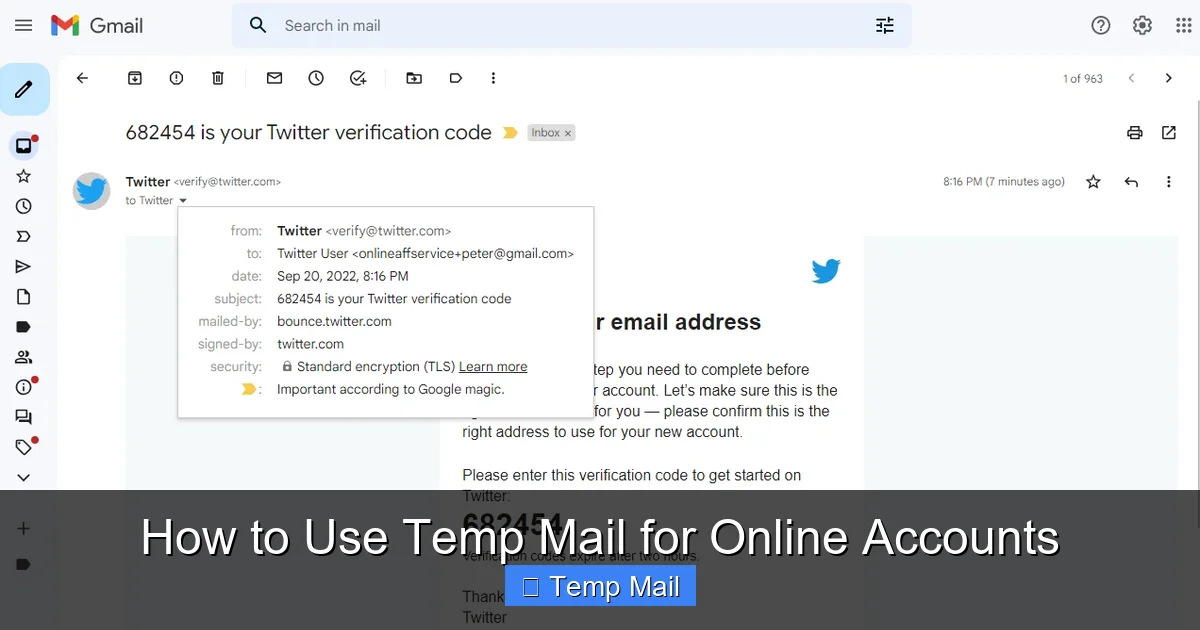
  • How to Use Temp Mail for Online Accounts

    How to Use Temp Mail for Online Accounts

    Protect your privacy and avoid spam by using a temporary email for non-essential online sign-ups. This simple method gives you a disposable address that expires, keeping your real inbox clean and secure from unwanted marketing and potential data breaches. It’s the fastest way to register for websites or downloads without long-term commitment or risk.


    How to Use Temp Mail for Online Accounts


    How to Use Temp Mail for Online Accounts

    Ever signed up for a new app or website, only to be bombarded with promotional emails for the next six months? You’re not alone. I’ve been there, scrolling through a clogged inbox wondering which service sold my details. It’s frustrating. That’s exactly why I started exploring temp mail—a simple, clever tool that completely changed how I handle online sign-ups. Think of it like a disposable phone number, but for your email. It’s not magic, but it’s pretty close for the right situations.

    In this guide, we’ll walk through exactly how to use temp mail for online accounts. I’ll share the honest pros and cons, practical steps, and real examples from my own experience. No fluff, just clear advice to help you protect your primary inbox and privacy. By the end, you’ll know exactly when and how to use a disposable email service effectively and safely.

    Key Takeaways

    • Protect your primary inbox: Use temp mail to sign up for sites that may send spam.
    • Generate emails instantly: Get a disposable address without any registration or personal details.
    • Mind the expiration: Temp emails are short-lived, often disappearing within hours.
    • Avoid for critical accounts: Never use temp mail for banking, password recovery, or essential services.
    • Manually check the inbox: You must visit the temp mail site to view messages; they won’t forward.
    • Choose reputable providers: Select well-known temp mail services for better reliability and security.
    • Use for one-time verification: Ideal for bypassing email verification on non-essential platforms.

    What is Temp Mail?

    Let’s start with the basics. Temp mail, short for temporary mail, is a service that provides you with a disposable email address. This address works for a short period—usually 10 minutes to a few hours—and then automatically vanishes. It’s designed for one-time or short-term use, like signing up for a website you’re trying out or downloading a resource that requires an email.

    How It Works

    Here’s the simple process: you visit a temp mail website, and it instantly generates a random email address for you (like [email protected]). That inbox is displayed on the same page. You copy that address, use it to sign up elsewhere, and then check for a verification email right there on the temp mail site. Once the time limit expires, the address and all its emails are deleted forever. No trace left behind.

    Key Features of a Good Service

    Not all temp mail services are created equal. A reliable one should offer:

    • No registration required: You shouldn’t need to create an account to get an email.
    • Auto-deletion: Emails and the address should disappear after the set time.
    • Inbox refresh: A button to manually check for new emails.
    • Attachment support: Ability to receive files (though often limited).
    • Multiple domain options: Some services let you choose from different email domains.

    Why Use Temp Mail for Online Accounts?

    This is the core question. Why go through the extra step of using a temp mail? For me, it boils down to three main reasons: fighting spam, guarding my privacy, and testing services without commitment.

    How to Use Temp Mail for Online Accounts

    Visual guide about How to Use Temp Mail for Online Accounts

    Image source: tmailor.com

    Combat Spam and Clutter

    This is the biggest win. Every time you use your primary email to sign up for a new service, you’re trusting that company with your contact info. Many sell or share email lists, leading to endless promotional blasts. A temp mail acts as a shield. I use it for anything that feels like a one-off: a free webinar, a discount code for a store I’ll probably never shop at again, or a forum I’m just browsing. The verification email goes to the disposable inbox, and when it self-destructs, so does the potential for future spam.

    Protect Your Privacy

    Your email address is a key piece of your digital identity. It can be used to track your online activity, link your accounts, and even attempt phishing attacks. By using a temp mail for low-stakes sign-ups, you reduce the number of places that have your real email. It’s a simple way to practice data minimization—only giving out personal info when absolutely necessary.

    Test Services Risk-Free

    Before committing to a paid service or a platform I’m unsure about, I like to test the waters. A temp mail lets me create a trial account without linking it to my main identity. If the service is sketchy or I don’t like it, I can walk away cleanly. No need to worry about unsubscribing later or having my real email caught in a data breach from a poorly secured site.

    How to Choose the Right Temp Mail Service

    With so many options out there, picking a temp mail service can feel overwhelming. I’ve tried dozens, and I look for a few key things. Reliability is top—you don’t want the inbox to load slowly or emails to disappear before you read them. Here’s what else matters.

    How to Use Temp Mail for Online Accounts

    Visual guide about How to Use Temp Mail for Online Accounts

    Image source: 10-minutemail.com

    Lifespan and Auto-Deletion

    Check how long the email lasts. Some give you 10 minutes, others 24 hours or even a few days. For most quick sign-ups, 30 minutes to an hour is plenty. If you need longer (like for a service that sends a delayed email), look for options with extended lifespans. The auto-deletion timer should be clear on the interface.

    Attachment Support

    Can the service receive files? Many temp mail providers block attachments for security reasons. If you’re signing up for a site that might send a PDF guide or a small image, you’ll want attachment support. It’s not critical for every use, but good to have.

    Browser Extensions and Mobile Apps

    I prefer services that offer a browser extension or a mobile app. It makes checking your disposable inbox way easier without having to open a new tab and search for the site every time. Some even let you generate a temp mail address directly from your browser toolbar.

    To give you a clearer picture, here’s a comparison of some popular temp mail services based on common features:

    Service Typical Lifespan Attachment Support Browser Extension/App Best For
    10MinuteMail 10 minutes (extendable) No No Very quick, one-time verifications
    Guerrilla Mail 60 minutes (can reset timer) Yes (limited) Yes (Chrome/Firefox) General use, slightly longer sessions
    Temp-Mail.org Up to 48 hours (auto-deletes after) Yes Yes (Android app) When you need a longer-lasting address
    Mailinator Inbox public, no password (deletes after ~24h) Yes (with premium) Yes (multiple platforms) Public inbox viewing, team use cases

    Note: Features and policies can change. Always check the service’s current terms before use.

    Step-by-Step: Using Temp Mail to Create an Online Account

    Alright, theory aside. Let’s get practical. Here’s exactly how I use temp mail for a typical online sign-up, from start to finish.

    How to Use Temp Mail for Online Accounts

    Visual guide about How to Use Temp Mail for Online Accounts

    Image source: 10-minutemail.com

    Step 1: Pick a Reputable Service and Open It

    I usually go with Guerrilla Mail or Temp-Mail.org for their balance of features and reliability. Open the website in your browser. You’ll see a random email address already generated for you, along with an inbox area that’s empty for now.

    Step 2: Generate (or Customize) Your Disposable Address

    Most services give you a random address. Some let you customize the local part (the part before @) if you want something memorable. For security, I stick with the random one. Copy the full email address to your clipboard.

    Step 3: Use It for Sign-Up

    Go to the website or app you want to join. In the email field, paste the temp mail address. Fill out the rest of the form and submit. If the service requires email verification, they’ll send a confirmation link to your disposable inbox.

    Step 4: Check Your Inbox and Verify

    Switch back to the temp mail tab. Hit the “Check Inbox” or “Refresh” button (some auto-refresh). You should see the verification email appear. Click on it to open, then click the verification link inside. This usually opens a new tab confirming your account is active. You can then close that tab.

    Step 5: Delete and Move On

    Once you’ve completed the sign-up and any necessary verification, you’re done with that temp mail address. You can simply close the browser tab. The service will automatically delete the address and its contents after the timer runs out. There’s no need to manually delete anything (though some services offer a “delete now” button if you’re in a hurry).

    Best Practices for Safe and Effective Use

    Using temp mail is straightforward, but a few best practices will make it smoother and safer. Think of these as my personal rules of the road.

    Ideal Use Cases: When to Definitely Use It

    • Downloading free resources: E-books, templates, or whitepapers that gate content behind an email.
    • Signing up for trials: Software or service trials where you’re just testing functionality.
    • Accessing public Wi-Fi portals: Many cafes and airports require an email to log in.
    • One-time discounts or coupons: Retail sites offering a first-purchase discount.
    • Forums or comment sections: Platforms that require registration to post.

    Accounts to Avoid: When NOT to Use Temp Mail

    This is critical. Never use a temp mail for anything important. That includes:

    • Financial accounts: Banking, PayPal, investment platforms.
    • Primary cloud storage: Google Drive, Dropbox, iCloud.
    • Social media profiles: Facebook, Instagram, Twitter (you’ll need to recover the account later).
    • Any account with recovery options: If you forget your password, the reset email goes to the disposable address—which is already gone. You’ll be locked out forever.
    • Work or school-related services: Anything official or tied to your real identity.

    Managing Multiple Temp Emails

    If you’re using temp mail frequently, you might end up with several active disposable addresses at once (e.g., one for shopping, one for forums). I keep it simple: use a different browser window or incognito window for each service to avoid mixing up inboxes. Or, use a service that lets you have multiple inboxes from one dashboard, like Mailinator’s private domains.

    Risks and Limitations: What Temp Mail Can’t Do

    It’s not all sunshine and no spam. Temp mail has clear limitations, and understanding them prevents headaches. Let’s be real about the downsides.

    Sites That Block Disposable Emails

    Many reputable platforms actively block known temp mail domains. They do this to prevent abuse, fraud, and spam. If you try to sign up with a disposable address on a site like Netflix, LinkedIn, or most major banks, you’ll get an error message saying the email is invalid. There’s no workaround here—you’ll need a real email for those services.

    Security Considerations

    A temp mail inbox is not secure by design. The address is often public or easily guessable. Anyone with the URL could potentially see the inbox if it’s not password-protected (many aren’t). Therefore, never use it for sensitive communications, password resets for important accounts, or anything containing personal data. Think of it as a public mailbox—anyone can look inside.

    Not for Critical Account Recovery

    I touched on this earlier, but it bears repeating. If you use temp mail for an account and later forget your password, you’re stuck. The recovery email has vaporized. You’ll have to contact customer support (if possible) or abandon the account. This makes temp mail unsuitable for any service you might need to access long-term.

    Conclusion: A Handy Tool in Your Privacy Toolkit

    So, there you have it. Using temp mail for online accounts isn’t a complicated hack—it’s a straightforward, practical habit that can dramatically reduce inbox clutter and protect your primary email from unnecessary exposure. From my experience, it’s become an automatic step whenever I’m trying out a new website or grabbing a freebie online.

    Remember the golden rule: temp mail is for low-stakes, non-essential sign-ups only. It’s your disposable shield against spam, not a replacement for your permanent email. Choose a reliable service, follow the simple steps we covered, and always be mindful of the risks. When used wisely, it’s a small change that makes your digital life a lot cleaner and more private. Give it a try next time you hesitate to enter your real email—you might just wonder how you ever signed up for things without it.


    Frequently Asked Questions

    Is using temp mail safe for online accounts?

    Yes, using a temporary email address is generally safe for signing up for non-critical websites, forums, or newsletters. It protects your primary inbox from spam and potential data breaches by isolating your main identity. However, you should never use it for important accounts like banking, primary social media, or any service requiring long-term access or password recovery.

    How do I get a temp mail address to sign up?

    Getting a temp mail address is instant and simple. Visit a reputable temporary email service website like Temp-Mail.org or 10MinuteMail.com, and a random, valid email address is generated for you automatically. You can then copy this address and use it during the registration process for any website that asks for an email.

    Can I use temp mail for any website or app?

    No, you cannot use temp mail for every service. Many popular platforms, including Google, Apple, Facebook, and major banking or payment apps, actively block known disposable email domains to prevent fraud and abuse. Always check if the service explicitly requires a “permanent” email during sign-up, as temp mail will likely be rejected.

    How long does a temp mail inbox last?

    The lifespan of a temp mail inbox varies by provider, typically ranging from 10 minutes to 24 hours. Most services automatically delete the inbox and its contents after a set period of inactivity. If you need to access a verification email, you must do so within that active window before the address and all its messages expire permanently.

    What happens if I lose access to my temp mail?

    If you lose access to your temporary email inbox (because it expired or you closed the browser), you also lose the ability to receive any verification emails or password reset links sent to that address. This means you will be unable to log into or recover the account associated with that temp mail, effectively locking you out of that online account forever.

    Why do some websites block temp mail addresses?

    Websites block temp mail to reduce spam, fake account creation, and fraudulent activity. Disposable emails make it easy for bad actors to create numerous anonymous accounts without traceability. For the website owner, this helps maintain a legitimate user base, comply with regulations, and prevent abuse of their platform’s resources or features.

  • Best Temp Email Sites That Actually Work

    Best Temp Email Sites That Actually Work

    Tired of your primary inbox getting flooded with spam after every online sign-up? Temporary email services are your secret weapon. They provide a quick, disposable address to use for downloads, forum registrations, or any site you don’t fully trust, keeping your real email safe and your sanity intact. After extensive testing, we’ve identified the most reliable temp email sites that actually work—ones that deliver emails instantly, have decent lifespans, and don’t require jump-through-hoop registrations. This guide cuts through the clutter to show you exactly which services to use, how to use them safely, and the critical risks you must never ignore.

    Let’s be real. The internet can feel like a giant data-hungry monster. You want to download that free PDF, read that juicy article, or get 10% off your first order, but the price is often your email address. Once you hand it over, you’re signed up for a lifetime of promotional newsletters, spam, and the constant, low-grade anxiety of wondering where your data ended up. What if you could just… borrow an email address for five minutes, get what you need, and then vanish? That’s not a spy movie fantasy; it’s the simple, powerful reality of using a temporary email service.

    But here’s the catch: not all temp email sites are worth your time. I’ve lost count of how many times I’ve used a “disposable” service only to find the inbox never loaded, the email arrived two hours late (if at all), or the site was so plastered with pop-up ads that I couldn’t click the right button. It’s incredibly frustrating. That’s why we did the dirty work. We tested dozens of services over months, signing up for everything from gaming forums to software betas. We filtered out the scams, the slowpokes, and the ad-ridden nightmares. This is your definitive guide to the best temp email sites that actually work—services that are fast, reliable, and get the job done without the headache.

    Key Takeaways

    • Temp emails are a privacy shield: They act as a buffer between your real identity and websites, preventing spam, data breaches, and unwanted marketing from cluttering your primary inbox.
    • Not all temp mail services are created equal: Many are filled with ads, have broken inboxes, or delete emails too quickly. The best ones are fast, simple, and actually deliver the messages you need.
    • They are for receiving, not sending: The primary function of a disposable address is to receive verification links or download files. You should never use them for important accounts, banking, or long-term communication.
    • Lifespan varies: Some inboxes last 10 minutes, others 24-48 hours, and a few even longer. Choose based on your need—quick download vs. a multi-day forum registration.
    • Security has limits: While they hide your real email, the content of your temp emails is often public on the provider’s site. Never send sensitive personal data (passwords, SSNs, credit card info) through a disposable address.
    • Use a dedicated browser or incognito window: For maximum anonymity, access your temp mail from a fresh browser session to avoid cookie tracking linking back to your main devices.
    • They are legal and widely used: Disposable email is a legitimate tool for developers, testers, privacy-conscious users, and anyone wanting to avoid the spam cycle. It’s the online equivalent of using a prepaid phone.

    What Exactly Is a Temporary Email (And How Do They Work)?

    Before we dive into the list, let’s clear the fog. A temporary email, also called a disposable or fake email, is a service that provides you with a random, working email address for a short period—usually anywhere from 10 minutes to 48 hours. You don’t need to create an account, set a password, or verify a phone number. You simply visit the website, an address is generated for you, and you copy/paste it wherever a site asks for an email.

    The Simple Magic Behind the Curtain

    It works because the service operates its own mail servers. When you get an address like [email protected], that inbox exists on their server. When a website sends a confirmation email to that address, it lands in that server’s database. You, visiting the temp mail site, can see that inbox in your browser because you’re directly connected to their server. There’s no link to your personal device or ISP. Once the timer runs out, or you manually delete the inbox, that address and all its emails are purged from existence. It’s digital spring cleaning.

    Core Features of a Good Service

    Not all temp mail is built the same. A stellar service has a few non-negotiable traits:

    • Instant Inbox Loading: The inbox should appear immediately after the address is generated, with a clear, auto-refreshing list of received emails.
    • Reliable Delivery: The verification email from the external site must arrive within 60 seconds, not 10 minutes. Speed is key for one-time codes.
    • Reasonable Lifespan: 10 minutes is often too short for slow email senders. 1-2 hours is the sweet spot for most tasks. Some tasks, like forum sign-up, may need 24+ hours.
    • Multiple Domain Options: The ability to choose from a few different @ domains (e.g., @mailtemp.net, @tmpmail.org) can help if a particular site blocks a known temp mail domain.
    • Minimal, Non-Intrusive Ads: A few text ads are fine; full-screen pop-ups, deceptive download buttons, and auto-play video ads are deal-breakers.

    The Best Temp Email Sites That Actually Work (Tested & Approved)

    After a rigorous testing process—signing up for hundreds of services, checking delivery times, assessing UI/UX, and measuring ad annoyance—here are the top performers. These are the best temp email sites that actually work for everyday use.

    1. Temp-Mail.org

    This is often the first name that pops up in searches, and for good reason. It’s the gold standard for reliability and speed.

    Why It Works So Well: Temp-Mail.org has a clean, modern interface with zero distracting pop-ups. Email delivery is nearly instantaneous, and the inbox updates automatically every 10 seconds. It offers a generous default lifespan (usually 2-4 hours, sometimes longer) and provides multiple domain choices right on the homepage. You can also manually extend the inbox time if needed.

    Best For: Almost everything. Quick sign-ups, downloading resources, and testing email workflows. It’s my personal go-to for 80% of tasks.

    Watch Out For: The free version has a daily limit on generated addresses (though it’s high enough for personal use). The “Premium” upgrade is advertised but easily ignored.

    2. 10MinuteMail.com

    The original classic. As the name suggests, it’s designed for speed and brevity.

    Why It Works So Well: It’s brutally simple. You get an address, a big countdown timer starts (10 minutes), and that’s it. There are no frills, no account creation, and virtually no ads. The inbox is plainly laid out. It’s incredibly fast because its sole purpose is to get you an email, wait, and vanish.

    Best For: The fastest, most urgent tasks. Need a code to unlock a webinar recording that starts in 2 minutes? This is your tool. Also great for one-off downloads where you know the email will arrive instantly.

    Watch Out For: The 10-minute limit is strict and can be too short if the external service is slow to send. You cannot extend the time. It’s a single-use tool.

    3. Guerrilla Mail

    Guerrilla Mail has been around forever and has a dedicated following for its unique features.

    Why It Works So Well: It offers a surprising amount of control for a free service. You can choose your own inbox name (e.g., [email protected]), which is great for organization. It also allows you to send *outbound* emails from the disposable address—a rare feature. The inbox is persistent until you manually discard it, so it can last for days if you keep the browser tab open.

    Best For: When you want a semi-persistent address for a multi-day task (like a forum that sends a reply email). Also excellent if you need to reply once from the disposable address (e.g., to a support ticket).

    Watch Out For: The interface feels a bit dated. Ad placement can be aggressive, with some misleading “download” buttons that are actually ads. Stay sharp.

    4. DropMail

    DropMail is a Swiss-based service that prioritizes privacy and clean design.

    Why It Works So Well: It has a beautiful, minimalist UI. One of its best features is the ability to generate multiple, unique addresses at once from a single page. Each address has its own independent timer. Emails appear seamlessly. It also offers a browser extension for even quicker access.

    Best For: Users who need to create several disposable addresses quickly—like a developer testing email flows for an app, or someone signing up for multiple free trials in one session.

    Watch Out For: The default lifespan can be short (sometimes 15-30 minutes), so you must be quick. The extension requires permission to read website data, which privacy hawks may question (though the service itself is reputable).

    5. Mailinator (Public Inboxes)

    Mailinator is a bit different. It’s not truly private; its main feature is public, shared inboxes.

    Why It Works So Well: You don’t even need to generate a new address. You can go to the site and type any name you want: [email protected]. If someone else hasn’t used it recently, you can check that inbox. This is fantastic for testing where you control both the sender and receiver (e.g., testing your own website’s email function). Received emails are public to anyone who guesses the address, so privacy is zero.

    Best For: Developers, QA testers, and anyone needing a simple catch-all for automated system emails. Useless for any personal or private communication.

    Watch Out For: Absolute zero privacy. Anyone can read emails in any public inbox. Never, ever use this for a personal account, password reset, or anything sensitive. It’s a tool for machines, not people.

    Smart Use Cases: When to Pull Out Your Temp Mail

    Knowing the best temp email sites is only half the battle. Knowing *when* to use them is what makes you an internet power user. Here are the most common, effective scenarios.

    Best Temp Email Sites That Actually Work

    Visual guide about Best Temp Email Sites That Actually Work

    Image source: content.latest-hairstyles.com

    The “Free Download” Gatekeeper

    This is the #1 use case. A blog or company offers a valuable ebook, template, or software trial, but demands your email. You suspect (or know) this will sign you up for a spammy newsletter. Use a temp address. Get the download link, save the file, and let the inbox die. Your primary email remains pristine.

    Bypassing Forum/Community Registration

    You want to ask a quick question on a niche forum or read a single thread on a site that requires login. Creating a real account feels like overkill and invites spam. A temp email gets you past the gate in 30 seconds. Just remember, if you want to reply or get notifications, you’ll need a persistent inbox like Guerrilla Mail’s.

    Testing Website & App Sign-Up Flows

    Are you building a website or app? You need to test your email verification system. Instead of using your real Gmail (and cluttering it with test emails), use a disposable address from DropMail or Temp-Mail.org. You can see exactly what your user sees, confirm the link works, and then discard the test address.

    Signing Up for “One-Time” Promotions

    That 20% off coupon for a store you’ll never shop at again? The free trial for a SaaS tool you just want to try for a weekend? Use the temp mail. Get the coupon code, activate the trial, and walk away without a trace. No risk of being added to a monthly subscription you forget to cancel.

    Protecting Your Identity on “Sketchy” Sites

    We’ve all been there: a site looks a little off, but you need to access its content. Maybe it’s a foreign news site, a torrent indexer, or a forum with dubious moderation. Using a temp address is a basic operational security (opsec) move. It severs the direct link between that site and your real identity.

    The Hidden Risks: What Temp Mail Can’t Protect You From

    Let’s be crystal clear: temp email is a fantastic tool, but it’s not a magic cloak of invisibility. It has serious limitations and risks you must understand.

    Best Temp Email Sites That Actually Work

    Visual guide about Best Temp Email Sites That Actually Work

    Image source: celestehalliday.com

    Risk #1: No Real Security or Encryption

    The connection to most temp mail sites is HTTPS (look for the padlock), so your session is encrypted. But the emails themselves sit on the provider’s server in plain text. A data breach at the temp mail company could expose all the emails in their active inboxes. More importantly, the service owner can read any email that passes through their system. Never, ever send passwords, financial info, or personal documents through a disposable address.

    Risk #2: The “Public Inbox” Problem (Mailinator-style)

    As mentioned, services with public, guessable inboxes mean anyone can see your “private” verification email. If you use [email protected], someone else could type that address and see your password reset link. This is why private, random-generated inboxes are vastly superior.

    Risk #3: It’s a One-Way Street

    You can receive, but sending is either impossible or highly restricted. You cannot have a meaningful conversation from a temp address. If a company’s support team only replies to the email you signed up with, you will never get that reply. Temp mail is for consumption, not communication.

    Risk #4: Blocked by Major Platforms

    Google, Facebook, Microsoft, Apple, and many major platforms actively block known disposable email domains. You cannot use a temp address to create a Gmail, Facebook, or Instagram account. They have sophisticated lists and will reject it instantly. Don’t even try; it’s a waste of time.

    Risk #5: Temporary Means Temporary

    If you need to access that forum account or that software license key six months from now, the temp mail inbox will be long gone. You will be locked out. Disposable addresses are for transient tasks. For anything you need to revisit, use your real email (or a dedicated secondary email you control).

    Best Practices: How to Use Temp Mail Like a Pro

    To get the most out of these tools without falling into traps, follow these simple rules.

    • Never Use for Critical Accounts: Banking, primary cloud storage, main social media, work logins—these must always be tied to your permanent, secure email. Full stop.
    • Assume the Inbox is Public: Treat every email you receive in a temp inbox as if it’s being read by a third party. Don’t click links that lead to your personal accounts or enter any personal data on the sites you visit after using the temp mail.
    • Use Incognito/Private Browsing Mode: Open your temp mail site in a private browser window. This prevents cookies from the temp site or the site you sign up for from linking your activity to your regular browser profile.
    • Copy, Paste, and Save Immediately: The moment you get a download link or a coupon code, copy it and paste it into a text file or note-taking app. Don’t rely on the temp inbox staying open. Close the tab as soon as you have what you need.
    • Check the Lifespan Clock: Always glance at the countdown timer on the temp mail site. If you’re waiting for an email and the timer is at 1 minute, you might need to refresh the page or switch to a service with a longer default lifespan.
    • Have a Backup Service Ready: If your first choice (say, Temp-Mail.org) is slow or the email doesn’t come, immediately switch to your #2 pick (like 10MinuteMail). Don’t waste 5 minutes refreshing a broken page.
    • Clear Your Browser Data After: If you used a private window, just close it. If you used a regular window, get in the habit of clearing cookies and cache for the temp mail site after your session, especially if you used a service that lets you set a custom inbox name.

    Conclusion: Your Inbox, Your Rules

    The relentless spam and data-harvesting of the modern web don’t have to be your reality. By strategically using a temporary email service, you reclaim control. You decide who gets your primary email address and, by extension, who gets to market to you, who gets to potentially breach your data, and who gets to clutter your digital life.

    Stick with the proven performers—Temp-Mail.org for all-around reliability, 10MinuteMail for blinding speed, and Guerrilla Mail for a bit more persistence. Avoid the hundreds of knock-off sites that exist only to serve ads and fail at the one job they’re supposed to do. Remember the golden rules: use them for reception only, never for anything critical, and always assume zero privacy on the receiving end.

    In the battle for your attention and your data, a disposable email is a small but mighty shield. Use it wisely, and enjoy a cleaner, safer, and far less annoying internet experience. Now go sign up for that free resource without fear!

    Frequently Asked Questions

    Is using a temporary email legal?

    Yes, using a disposable email service is completely legal. It’s a standard tool for privacy protection and software testing. The illegality would come from using it for fraud, hacking, or to impersonate someone else, which applies to any communication tool.

    Are temporary emails safe from hackers?

    They are safe in the sense that your real email and associated accounts are shielded from the site you’re signing up for. However, the temp mail inbox itself is not a secure vault. The provider can see all emails, and if their security is poor, a hacker could access active inboxes. Never send sensitive data through them.

    How long do emails last in a temporary inbox?

    It varies by service. Some, like 10MinuteMail, last exactly 10 minutes. Others, like Temp-Mail.org or Guerrilla Mail, can last from 2 hours to several days, often with an option to extend. Always check the timer on your specific inbox.

    Can I send emails from a temporary address?

    Generally, no. The primary function is to receive. A few services like Guerrilla Mail allow limited outbound email, but this is rare and often restricted to prevent spam. Do not rely on a temp address for any correspondence.

    What happens if a site I signed up with needs to contact me later?

    You won’t get that communication. Once the inbox expires, all emails are deleted. This is why you should only use temp mail for sites where you don’t expect to need future contact or account recovery (like a one-time download).

    Which is the absolute best temp email site for beginners?

    For sheer simplicity and reliability, Temp-Mail.org is the best starting point. It has the least learning curve, fastest delivery, and the cleanest interface. Use it for 90% of your needs and only explore others for specific features like custom names or extended time.

  • Disposable Email for One-time Verification

    Disposable Email for One-time Verification

    Disposable email for one-time verification is a powerful, free tool for protecting your main email address from spam and data breaches. It creates a temporary, anonymous inbox that self-destructs after a short time or a single use. Perfect for signing up to websites, downloading content, or verifying accounts you don’t plan to keep, it’s a essential practice for digital privacy and inbox hygiene. Use it wisely for low-stakes interactions to keep your permanent identity secure.

    Have you ever hesitated to sign up for a free webinar, download a useful-looking template, or create an account on a new forum because it meant handing over your primary email address? You’re not alone. That little voice of caution is spot-on. Every time you enter your email on a website, you’re trusting that company with a key to your digital mailbox. And in an age of relentless marketing and frequent data breaches, that trust is often misplaced. This is where the brilliant, simple concept of disposable email for one-time verification comes into play. It’s not a shady hack; it’s a legitimate and savvy privacy tool for the modern internet user.

    Think of your primary email address as your home address. You wouldn’t give it to every random store clerk or survey taker on the street, would you? You’d use a P.O. box or a friend’s address for the stuff that doesn’t matter. A disposable email is exactly that: your digital P.O. box. It’s a temporary, no-strings-attached email inbox you can use for a single purpose, then walk away from forever, leaving no trace behind. In this complete guide, we’ll dive deep into what disposable email is, how it works, its undeniable benefits, the smartest ways to use it, the risks you must know, and how to choose a reliable service. By the end, you’ll be equipped to take control of your inbox and your online privacy.

    Key Takeaways

    • Core Purpose: Disposable email provides a temporary, anonymous address to shield your primary inbox from spam, marketing emails, and potential data leaks during one-off online interactions.
    • How It Works: These services generate a random email address and inbox accessible via a web browser. The inbox and address expire after a set time (e.g., 10 minutes to 24 hours) or once you close the browser tab.
    • Primary Benefit: The main advantage is inbox protection. You never give out your real email to untrusted sites, eliminating long-term spam and reducing your digital footprint for that service.
    • Ideal Use Cases: Perfect for registering on forums, downloading gated content (e-books, templates), accessing website demos, verifying accounts for apps you’ll try once, and bypassing email gates on questionable sites.
    • Key Limitations: You cannot send emails from a disposable address. All received emails are public to anyone with the inbox URL. It is not for banking, primary social media, or any account where recovery or security is critical.
    • Security & Privacy: While it hides your identity from the recipient, the disposable email provider itself can see the emails. Choose reputable services with clear privacy policies and no requirement for personal details to generate an address.
    • Best Practice: Always assume the temporary inbox is public. Never use it for sensitive information, password resets for important accounts, or any transaction requiring legal or financial verification.

    What Exactly is Disposable Email?

    At its core, a disposable email (also called temporary mail, throwaway email, or temp mail) is a service that provides you with a randomly generated email address and a corresponding inbox. This inbox exists for a very short, predefined period—usually anywhere from 10 minutes to 24 hours—or until you manually delete it. The defining characteristic is its ephemeral nature. It’s designed for a single, specific task and then it vanishes.

    The Mechanics: How a Temporary Inbox is Created

    You don’t need to register or create an account to get a disposable email. That’s the beauty of it. You simply visit a provider’s website, like Temp-Mail, Guerrilla Mail, or Maildrop. The site instantly generates a random email address for you (e.g., [email protected]) and displays a web-based inbox interface. Any emails sent to that address are captured and displayed right there on the page. There is no password, no login, and no persistent account. The entire system is built for instant, anonymous access.

    Some services allow you to customize the local part (the part before the @) or choose from a few domain options. The inbox is typically accessible via a unique URL that you keep open in your browser tab. If you close that tab, you can often return to the same inbox later using that same URL, as long as the expiration timer hasn’t run out. Once the time is up, the address is recycled, and the inbox and all its contents are permanently deleted from the server.

    The Compelling Benefits: Why You Should Use It

    Using a disposable email for one-time verification isn’t just about avoiding a few extra marketing newsletters. It’s a foundational step in managing your digital identity and security.

    Disposable Email for One-time Verification

    Visual guide about Disposable Email for One-time Verification

    Image source: devdude.com

    1. Ultimate Spam Prevention

    This is the most obvious and valuable benefit. When you use your real email to sign up for a service, you’re often agreeing (sometimes buried in fine print) to receive promotional emails. Even if you unsubscribe later, your email is now on a list that can be sold to other marketers. A disposable address acts as a perfect firewall. All that promotional noise gets sent to an inbox that will self-destruct in an hour. Your primary inbox remains pristine, only receiving emails from people and services you genuinely trust and want to hear from.

    2. Enhanced Privacy & Reduced Digital Footprint

    Every account you create with your real email is a data point that links your identity to a website. In the event of a data breach (which is terrifyingly common), hackers can sell or use that email/username combination to attack you on other platforms, especially if you reuse passwords. By using a temporary email, you sever that link. The website has no way to tie that anonymous, fleeting address back to your real identity. You significantly reduce the number of services that have a persistent email identifier associated with you.

    3. Bypassing Email Gates & Accessing Content

    Many websites and blogs use “email gates” to access valuable content like whitepapers, e-books, or webinar recordings. They ask for your email in exchange for the download. While sometimes legitimate, often this is just a lead generation tactic. A disposable email lets you get the content you want without committing your primary address to their sales funnel. It’s a fair exchange: you get the resource, they get a meaningless email address that bounces after an hour.

    4. Testing & Development

    For app developers, testers, or anyone building software that requires email verification, disposable emails are indispensable. You can quickly generate a new address for each test account, verify it, perform your tests, and move on without cluttering your personal or work inbox with dozens of automated “Welcome!” and “Verify your email” messages.

    5. Avoiding Account Linking

    If you want to browse a service anonymously or create a separate, unlinked account (e.g., a second social media profile for a hobby), using your main email immediately ties the accounts together. A disposable email allows you to create that second account without revealing it’s connected to your primary identity.

    Perfect Use Cases: When to Break Out the Temp Mail

    Knowing *when* to use a disposable email is as important as knowing how. Here are the prime scenarios where it’s the smart choice.

    Disposable Email for One-time Verification

    Visual guide about Disposable Email for One-time Verification

    Image source: assets-global.website-files.com

    Downloading Gated Content

    You see a blog post titled “The Ultimate Free Budget Template” but before you can download the Excel file, you need to enter your email. Is this template worth getting on a marketing list? Probably not. Use a disposable address. Get the file, and forget about it.

    Signing Up for One-Time Access or Trials

    You want to try a new SaaS tool’s 14-day trial. They ask for an email. Instead of using your work email (which might get follow-up sales calls) or your personal email (which will get spam), use a temp address. Complete your trial, evaluate the tool, and walk away. No cleanup needed.

    Registering on Forums or Commenting Platforms

    You have a specific, one-time question on a technical forum or want to comment on a news article that requires an account. Creating a permanent account with your real email is overkill. A disposable email gets you past the gate quickly and anonymously.

    Accessing Wi-Fi or Public Services

    Some airports, hotels, or cafes require you to “register” with an email to get Wi-Fi access. This is often just for marketing. Use a disposable address to get the password and connect without signing up for a newsletter you’ll never read.

    Bypassing “Email Required” on Dubious Sites

    You land on a website that looks sketchy but you need to see a piece of information. It demands an email to proceed. This is a classic disposable email scenario. Get in, get the info, and close the tab. Your real email never touches their servers.

    The Critical Risks & Limitations: What You Must Not Do

    Disposable email is a powerful tool, but it has clear boundaries. Using it incorrectly can backfire and cause real problems.

    Disposable Email for One-time Verification

    Visual guide about Disposable Email for One-time Verification

    Image source: pcrisk.pt

    1. No Sending Capability

    These inboxes are receive-only. You cannot compose and send emails from a disposable address. It’s a one-way street. If a service requires you to *send* an email (like for some password recovery processes), a disposable address won’t work.

    2. Inherent Publicity & Lack of Privacy

    This is the biggest misconception. The inbox is not private. Anyone who knows the unique URL to your temporary inbox can view all emails received there. The service provider themselves can see the contents. Never, ever use a disposable email for:

    • Banking, financial services, or cryptocurrency accounts.
    • Primary social media accounts (Facebook, Twitter, Instagram, LinkedIn).
    • Any account where password recovery is sent via email. If you lose access, you’re locked out forever.
    • Official government correspondence, legal documents, or healthcare portals.
    • Any communication containing sensitive personal information (SSN, ID numbers, confidential documents).

    3. Short Lifespan Means Lost Access

    By design, the inbox disappears. If you need to access a verification code or a downloaded file link later, it will be gone. You must complete the entire verification process in one browser session while the inbox is active. Do not close the tab until you’ve finished.

    4. Some Websites Block Known Disposable Domains

    Many legitimate services (like Google, Microsoft, major social platforms, and most banking sites) actively maintain blocklists of disposable email domains. They will simply refuse to let you sign up with an address from tempmail.demo. This is a security measure for them, but it means you can’t use a disposable email for services where you actually want a lasting account.

    5. Potential for Abuse & Reputation

    Because they are anonymous, disposable emails are frequently used for spam, fraud, and creating fake accounts. If a service you use gets abused by someone using a disposable email from a specific provider, that provider’s entire domain might get a bad reputation and be blocked by other services (like email servers). This can sometimes lead to your legitimate, non-disposable emails being flagged as spam if they share the same domain name (unlikely with major providers, but possible with smaller ones).

    How to Choose a Reliable Disposable Email Service

    Not all temp mail services are created equal. Some are ad-supported free-for-alls, while others offer more features for a fee. Here’s what to look for.

    Key Features to Prioritize

    • No Registration Required: The gold standard. You should get an address immediately upon visiting the site, with zero personal information requested.
    • Customizable Address (Optional but Helpful): The ability to choose your username (e.g., [email protected]) makes it easier to remember or share if needed for a specific verification.
    • Multiple Domain Options: If one domain is blocked by a site you’re trying to access, having a choice of domains (e.g., @tempmail.com, @tmpmail.org, @dispostable.com) can help you bypass the block.
    • Reasonable Expiry Time: 10-60 minutes is standard and sufficient for most verification tasks. Some offer 24 hours, which is useful for multi-step processes.
    • Clean, Ad-Light Interface: Some free services bombard you with aggressive, misleading ads that look like download buttons. Choose a provider with a clean, functional webmail interface.
    • Clear Privacy Policy: Read it. Does the service log IP addresses? Do they claim to never store or read emails? Reputable services will state that emails are deleted from servers immediately after expiry and they do not access user content.

    Services like Temp-Mail, Guerrilla Mail, Maildrop, and 10 Minute Mail have been around for years and are generally trusted for basic one-time verification. They offer the core features listed above. For more advanced needs, like API access for developers or longer inbox times, paid services like SimpleLogin or AnonAddy (which are actually email alias forwarding services, not pure disposable mail) provide more control and privacy, but they require account creation.

    The Future & Alternatives: Beyond Simple Temp Mail

    The landscape of email privacy is evolving. While classic disposable email is here to stay, new models are emerging.

    Email Aliasing: The More Robust Cousin

    Services like SimpleLogin, AnonAddy, and Firefox Relay create unique, forwardable email aliases (e.g., [email protected]) that forward to your real inbox. You can delete the alias at any time, stopping all emails from that sender. Unlike disposable mail, aliases are persistent until you kill them, you can send replies from them, and they feel more like a “real” email address to the recipient. This is an excellent upgrade for long-term privacy on sites where you want an account but don’t want to use your primary email.

    Built-in Features from Providers

    Some forward-thinking email services are adding privacy features. For example, Gmail’s “+” trick (adding +something to your address) can help filter emails, but it doesn’t hide your core address. Apple’s “Hide My Email” feature, available with an iCloud+ subscription, automatically generates unique, random email addresses that forward to your main Apple ID email. This is a seamless, integrated solution for Apple ecosystem users.

    The Role of Regulations

    Laws like GDPR in Europe and CCPA in California give users more rights over their data, including the right to be forgotten. While not directly about disposable email, these regulations make it harder for companies to hold onto your data indefinitely, which complements the “use and lose” philosophy of temporary email.

    Conclusion: A Simple Tool for a Complex Problem

    Disposable email for one-time verification is more than just a convenience; it’s a fundamental tool for digital self-defense in 2024. It’s the digital equivalent of wearing a mask in a crowd—you’re not doing anything wrong, you’re simply choosing not to reveal your identity to every single entity you interact with. The spam in your primary inbox isn’t just a nuisance; it’s a symptom of how your personal information is treated as a commodity. By adopting the habit of using a temporary email for any sign-up that isn’t critical to your life or finances, you take a powerful, proactive step.

    You reclaim your inbox as a space for meaningful communication. You shrink your attack surface for data breaches. You assert a tiny bit of control over a data-hungry internet. Start today. The next time a website asks for your email to download a PDF or view a demo, pause. Open a new tab, generate a disposable address, and use that instead. Experience the quiet satisfaction of closing that tab knowing your real email is safe, and that the digital trail you just left will vanish into thin air. It’s a small habit with a massive impact on your online peace of mind.

    Frequently Asked Questions

    Is using disposable email legal and safe?

    Yes, using disposable email is completely legal and a safe practice for privacy when used correctly. The safety risk comes from using it for important accounts (like banking) where you need reliable access and security, not from the act of creating a temporary address itself.

    Can websites detect that I’m using a disposable email?

    Yes, many websites maintain lists of known disposable email domains and will block them during sign-up. This is common for financial services, major social platforms, and email providers like Gmail or Outlook who want to prevent abuse. If your temp email is blocked, you’ll need to use a real address or try a different disposable domain if the site allows it.

    What happens to the emails sent to a disposable address?

    Emails are stored on the disposable service’s server and displayed in your web-based inbox. Once the inbox expires (due to time limits or browser closure), all stored emails and the address itself are permanently deleted from the server and are unrecoverable.

    How is disposable email different from an email alias?

    Disposable email is typically receive-only, anonymous, and short-lived. An email alias (from services like SimpleLogin) is a unique forwardable address linked to your real inbox. You can send from it, it persists until you delete it, and it offers more functionality for long-term use on less-trusted sites.

    What is the best practice for using a disposable email?

    The golden rule: use it for one-time, non-critical interactions only. Complete the entire verification or download process in a single browser session without closing the tab. Never use it for any account where you need password recovery, legal verification, or to receive sensitive information.

    What should I do if I accidentally used my disposable email for an important account?

    If you’ve used a disposable email for an account you now need to keep (like a social media profile), check immediately if the service allows you to change the email address in account settings. If not, you may be locked out of that account forever when you lose access to the temporary inbox. For critical services, always use a permanent, accessible email from the start.

  • Temp Mail for Privacy-focused Users

    Temp Mail for Privacy-focused Users

    Temp mail—also called disposable or burner email—is a short-lived email address designed to shield your primary inbox from spam, tracking, and data harvesting. For privacy-focused users, it’s a critical tool for maintaining anonymity during one-time online interactions, from forum registrations to software downloads. By understanding its limitations and combining it with other privacy practices, you can significantly reduce your digital footprint and reclaim control over your personal information.

    Key Takeaways

    • Core Purpose: Temp mail provides a sacrificial email address to protect your primary, personally identifiable email from spam, marketing lists, and potential data breaches.
    • Anonymity vs. Security: It offers strong anonymity for sign-ups but is not a secure channel for sensitive communications, as providers can often read messages.
    • Key Use Cases: Ideal for account verification, downloading gated content, accessing public Wi-Fi portals, and any interaction where long-term trust isn’t required.
    • Provider Selection: Choose services based on privacy policies (no logs, encryption), inbox duration, domain reputation, and ad-load; avoid those requiring personal info.
    • Inherent Risks: Emails are temporary and publicly accessible on some services; never use for banking, primary accounts, or any service requiring account recovery.
    • Best Practice Integration: Use temp mail as one layer in a broader privacy strategy alongside a VPN, password manager, and separate “burner” personas for different activities.
    • Legal & Ethical Use: It is a legitimate privacy tool; misuse (fraud, harassment) is illegal and unethical. Use responsibly to protect your data, not to evade accountability.

    Introduction: The Inbox as a Privacy Battleground

    Your email address is more than a communication tool; it’s a master key to your digital identity. It’s the primary hook for data brokers, the entry point for targeted advertising, and the common thread linking your scattered online activities. For the privacy-focused user, every time you share your real email, you’re handing over a piece of your digital self. This is where temporary email—temp mail—enters the picture not as a convenience, but as a fundamental shield.

    Think of your primary email as your home address. You wouldn’t give it to every stranger on the street. Temp mail is like using a generic P.O. box for all those mundane, one-off interactions: picking up a free ebook, signing up for a webinar, or testing a new app. It creates a vital buffer zone, containing the spam and data leakage to a disposable address that vanishes when its job is done. This article isn’t just about what temp mail is; it’s a deep dive into how privacy-centric individuals can wield it strategically, understand its true capabilities and limits, and integrate it seamlessly into a robust personal privacy framework.

    What Exactly is Temp Mail? Beyond the “Disposable” Label

    The Mechanics: How a Temp Mail Address is Born and Dies

    At its core, a temp mail service generates a random email address at a dedicated domain (e.g., `[email protected]`). This address exists solely for you on a publicly accessible web inbox. No password is required to claim it initially—you simply visit the site, and an address is assigned. You use this address to receive a verification link or download file. After a set period (typically 10 minutes to 48 hours) or after the inbox is cleared, the address and all its messages are permanently purged from the server. It’s a digital “burner phone” for your inbox.

    Temp Mail for Privacy-focused Users

    Visual guide about Temp Mail for Privacy-focused Users

    Image source: addons.mozilla.org

    Key Characteristics That Define Privacy-Centric Temp Mail

    Not all temp mail services are created equal. For the privacy-focused user, the defining characteristics are:

    • Zero-Knowledge Claim: The service should not require registration, personal details, or CAPTCHAs that could be tied back to you. The best ones generate an inbox instantly upon page load.
    • No Logs Policy: A clear, audited privacy statement confirming they do not log IP addresses, message contents, or timestamps in a way that could associate an inbox with a user.
    • Encrypted Connections (HTTPS): Mandatory for all interactions to prevent network eavesdropping on the messages you receive.
    • Self-Destructing Inbox: Automatic deletion after a short, predefined time. Some allow manual clearing.
    • Public Inbox Access: Anyone with the exact address can view the inbox. This is a feature (no login needed) and a critical risk (see Security section).

    Why Privacy Warriors Need Temp Mail: The Core Use Cases

    Case 1: The “Gated Content” Trap

    This is the #1 use case. You want a whitepaper, a discount code, or a software trial. The form demands an email. Using your primary email guarantees that address is sold to data aggregators and added to relentless promotional lists. Temp mail lets you bypass the gate, get the file, and vanish. Example: You’re researching cybersecurity tools. A vendor requires an email for a “free threat assessment report.” Use a temp address, download the PDF, and let the inbox expire. Your real email stays off their marketing drip campaign.

    Temp Mail for Privacy-focused Users

    Visual guide about Temp Mail for Privacy-focused Users

    Image source: imag.malavida.com

    Case 2: Forum & Comment Section Armor

    Many online forums, news sites, and blogs require email verification to comment or post. This is a classic vector for harvesting active, engaging email addresses for spam or even targeted harassment. A temp address lets you participate in a discussion about a sensitive topic (political, health-related) without creating a permanent, searchable link between your viewpoint and your identity.

    Case 3: App & Service “Test Drives”

    Want to try a new social media app, a productivity tool, or a game without the commitment? Signing up with your primary email starts a permanent relationship, complete with newsletters and notifications. Using temp mail for the initial trial run allows you to evaluate the service’s value proposition without contaminating your main digital space. If you decide to keep it, you can then consider a more permanent, dedicated email.

    Case 4: Public Wi-Fi & Network Portal Login

    Coffee shops, airports, and hotels often force you to provide an email to access their Wi-Fi. This is a data collection goldmine for them. A temp address satisfies their requirement while keeping your real email out of their customer database and away from potential security flaws in captive portal systems.

    Choosing the Right Temp Mail Service: A Privacy Checklist

    The market is flooded with temp mail providers. Many are ad-heavy, log data, or have shady ownership. Here’s how to vet them like a pro.

    The Non-Negotiables: What to Look For

    • Domain Reputation: Some domains (like `10minutemail.com`) are notorious and get blocked by major services (Google, Microsoft). Research which domains are currently accepted by the sites you frequent. Services offering multiple domain options are better.
    • Inbox Lifespan: Is it 10 minutes? 1 hour? 1 day? For most uses, 30-60 minutes is sufficient. Longer isn’t necessarily better, as it increases the window for someone else to stumble upon the public inbox.
    • Ad Load & Malvertising Risk: Free services rely on ads. Excessive, aggressive, or low-quality ads are a red flag for poor security practices and potential malvertising (malicious ads). A clean, minimal interface is preferable.
    • Feature Set: Do you need to reply? Most don’t allow replies (they’re receive-only). Do you need multiple addresses at once? Some allow managing several inboxes from one dashboard.

    Red Flags to Avoid at All Costs

    • Any Registration Required: If it asks for an email, phone number, or password to “create” an account, it’s not truly disposable and defeats the purpose.
    • Unclear or Missing Privacy Policy: If they don’t explicitly state they don’t log data and messages are deleted, assume they do.
    • Requests for “Human Verification” that are Persistent: While a simple CAPTCHA is common, complex puzzles or repeated prompts can be a data-scraping tactic.
    • Owned by Known Data Brokers: Some larger marketing companies operate temp mail services as lead generation tools. A quick search for the service name + “data broker” or “parent company” can reveal this.

    The Minimalist: Simple, no-frills sites like Temp-Mail.org or 10MinuteMail (use with caution due to domain blocks). Good for a quick code.

    The Power User: Services like SimpleLogin or AnonAddy (though these are more “alias” forwarding services, they offer stronger control and can be used with a custom domain for a semi-permanent, yet privacy-preserving, solution).

    The Researcher: For testing multiple sign-ups, find a service that lets you generate several addresses from one tab without switching.

    The Critical Limitations and Security Realities You Must Accept

    Fact 1: The Inbox is Public by Design

    Because no login is required, anyone who guesses or stumbles upon your exact temp address can read your incoming emails. This is the single biggest security limitation. Therefore, never use temp mail for:

    • Account recovery for any important service (password resets).
    • Receiving sensitive documents (contracts, IDs, financial statements).
    • Any communication where confidentiality is expected.
    • Two-Factor Authentication (2FA) codes if the service allows email as a method. The codes are live and could be intercepted by a random person checking the same public inbox.

    Fact 2: The Provider is a Potential Man-in-the-Middle

    While the service doesn’t “know” you personally, the operator of the temp mail server can read all messages that pass through it. A malicious or compromised provider could harvest data from those messages (links, attachments, content). This is why trusting the provider’s stated no-logs policy is an act of faith. For highly sensitive operations, even a temp mail is too risky.

    Fact 3: It’s a One-Way Street (Usually)

    You can receive, but you almost always cannot send emails from a temp address. This is by design to prevent spam abuse. Don’t try to use it as your primary contact method.

    Fact 4: Reputation Damage & Blocking

    Disposable email domains have a bad reputation. Many smart services (especially financial, social media giants, and Google/Microsoft) actively block known temp mail domains from registering. You will frequently get “invalid email” errors. This is a necessary trade-off for privacy.

    Mastering Temp Mail: Advanced Tactics for the Discerning User

    Tactic 1: The “Burner Persona” Ecosystem

    Don’t just use random temp addresses. Create a mental model. Have a “shopping” temp address you use for retail newsletters and discount codes. Have a “tech trial” one for software sign-ups. Have a “forum debate” one for controversial comments. This compartmentalization means if one address gets spammed or blocked, it only contaminates that specific slice of your activity.

    Tactic 2: Pair with a VPN or Tor

    When you visit the temp mail site, your IP address is logged by that site. To prevent this IP from being associated with your subsequent activities on other sites (via browser fingerprinting or timing attacks), use a reputable VPN or the Tor browser. This severs the link between your temp mail session and your real IP location.

    Tactic 3: Manual Inbox Clearing & Speed

    Don’t let the inbox sit. Once you’ve received the necessary code or file, clear the inbox manually if the service allows it, or just close the tab and let it expire. The shorter the lifespan of the address and its contents, the smaller the attack window.

    Tactic 4: Know When to Graduate to an Alias Service

    If you find yourself wanting to receive emails from a particular service long-term but without using your main address, consider a email alias/forwarding service like SimpleLogin, AnonAddy, or DuckDuckGo’s Email Protection. These create unique, forwardable aliases (e.g., `[email protected]`) that you can disable at any time. It’s a more robust, longer-term privacy solution than pure temp mail for recurring services you trust but don’t want to fully expose yourself to.

    Conclusion: Temp Mail as a Prudent Tool, Not a Panacea

    Temp mail is an indispensable instrument in the privacy-focused user’s toolkit. It’s the digital equivalent of a cash purchase or a pseudonym at a hotel—a way to engage with the modern web on your own terms, without surrendering your identity as the cost of entry. Its power lies in its simplicity and disposability, creating a crucial firewall between your core identity and the data-hungry ecosystem of the internet.

    However, it is not a magic bullet. Its limitations—public inboxes, non-deliverability, and provider trust—are fundamental to its design. The wise user employs it with precision, for specific, low-stakes interactions where anonymity is the goal and confidentiality is not a requirement. It works best not in isolation, but as one layer in a multi-layered defense that includes a VPN, a password manager, conscious data minimization, and a deep understanding of the trade-offs inherent in every online action. By mastering temp mail, you take a powerful, immediate step toward a cleaner, more private, and more controlled digital life. Start using it today for every non-essential sign-up, and feel the relief as your primary inbox finally stops screaming for your attention.

    Frequently Asked Questions

    Is using temp mail legal?

    Yes, using a disposable email address is completely legal. It is a legitimate privacy and security tool. However, using it to commit fraud, evade legal responsibilities, or harass others is illegal, as with any tool.

    Can I use temp mail for important accounts like banking or social media?

    Absolutely not. You should never use temp mail for any account you need to recover, that holds monetary value, or that represents your long-term identity. You will be permanently locked out if you lose access to the inbox, and these services often block disposable domains anyway.

    Is temp mail secure? Can the provider read my messages?

    Security is limited. While the connection is typically HTTPS-encrypted, the provider operates the server and can technically read any message that arrives in the public inbox. Therefore, it is not secure for sensitive information. Its primary strength is anonymity from the recipient, not confidentiality from the provider.

    Why was my temp mail address rejected by a website?

    The website’s system likely has a blacklist of known disposable email domains. This is a common anti-spam and anti-fraud measure. You’ll need to try a different temp mail service or use a different, more reputable domain. Some sites simply don’t allow any non-corporate or ISP domains.

    What happens to my emails after the temp address expires?

    They are permanently and irreversibly deleted from the service’s servers. There is no way to retrieve them. This is by design to protect your privacy and the service’s storage resources.

    Should I combine temp mail with a VPN?

    Yes, doing so is a best practice. Using a VPN when accessing the temp mail site prevents your real IP address from being logged by that service. This adds a stronger layer of anonymity, making it harder to link your temp mail session back to your physical location or ISP.

  • Top Temporary Mailboxes You Can Use Instantly

    Top Temporary Mailboxes You Can Use Instantly

    Temporary mailboxes offer instant, disposable email addresses to protect your primary inbox from spam and privacy breaches. They’re perfect for one-time sign-ups, downloads, and any situation where you’d rather not share your real email. With no registration required, these services provide a quick, anonymous way to receive emails without long-term commitment.

    Have you ever felt that pang of regret right after hitting “Submit” on a form, trading your precious email address for a free e-book or a discount code? You know what comes next: a torrent of spam, promotional newsletters you never asked for, and your primary inbox turning into a digital junkyard. It’s a universal frustration. But what if you could have a secret, throwaway email address ready in seconds, just for these exact moments? That’s the powerful, simple promise of temporary mailboxes. They are your digital bodyguards, your privacy shields, and your spam traps—all rolled into one instantly generated address. In this deep dive, we’re cutting through the noise to bring you the definitive guide to the top temporary mailboxes you can use instantly. We’ll explore how they work, review the best services available right now, and arm you with the knowledge to use them wisely and safely.

    The concept is beautifully straightforward. Instead of handing out your real, personal, or work email to a website you don’t fully trust, you use a temporary one. You receive the verification email or download link in this disposable inbox, get what you need, and then walk away. The address, and all its history, vanishes into the digital ether. No strings attached. No cleanup required. For anyone tired of managing email overload, this isn’t just a convenience—it’s a essential tool for maintaining digital hygiene and protecting your online identity. Let’s get started on finding your perfect temporary match.

    Key Takeaways

    • Instant Anonymity: Temporary mailboxes generate a working email address in seconds, requiring no personal information to create, shielding your identity online.
    • Spam Prevention Tool: They act as a sacrificial buffer, capturing unwanted promotional emails and potential malware before it reaches your permanent inbox.
    • Use-Case Specific: Ideal for one-time verifications, downloading gated content, or testing services, but never for critical accounts like banking or primary social media.
    • Varying Security Levels: Security differs by provider; public inboxes are inherently less private, while some offer password-protected, private temporary boxes.
    • Inherent Time Limits: All temporary emails have a short lifespan (minutes to hours) and are automatically deleted, making them unsuitable for long-term communication.
    • Smart Usage is Key: Best practices include using a VPN for extra anonymity, never using them for sensitive data, and clearing your browser after each session.
    • Evolving Technology: The future points toward AI-powered abuse detection, browser extensions for seamless integration, and potentially more robust privacy features.

    Understanding Temporary Email: Your Instant Digital Shield

    Before we jump into the reviews, it’s crucial to understand what temporary email actually is and how it differs from your standard Gmail or Outlook account. At its core, a temporary mailbox is a service that provides a functional email address for a very short, predefined period. These addresses are generated automatically by the service’s servers and are not tied to any individual user in the traditional sense.

    How Does It Work? The Mechanics of Disposability

    The process is almost magical in its simplicity. You visit a temporary mail website. The site’s system instantly creates a random email address for you, often something like [email protected]. This address is now live and can receive emails. The service’s homepage typically displays an inbox that is automatically linked to this new address. You copy this address, paste it into the website that requires an email, and then return to the temporary mail site to check for the incoming verification email. The entire cycle—from generating the address to receiving a message—can happen in under 30 seconds. No account creation, no password, no two-factor authentication. It’s email on-demand.

    The lifespan of the inbox varies by provider. Some last for 10 minutes, others for 1 hour, and a few might keep it alive for 24 hours or until you close the browser tab. Once the time expires or the inbox is manually cleared, the email address is permanently retired and may be recycled for another user in the future. This ephemeral nature is both its greatest strength and its most significant limitation.

    Key Features to Look For

    Not all temporary mail services are created equal. While the core function is the same, certain features can dramatically improve your experience. Here’s what to evaluate:

    • Inbox Lifespan: How long does the inbox stay active? 10 minutes might be too short for slow services; 1-2 hours is a comfortable average.
    • Domain Options: Some services offer multiple domain names (e.g., @tempmail.com, @tmpmail.org). This can help if a specific domain is blocked by a website.
    • Attachment Support: Can you download files sent to the temporary address? This is critical for receiving PDFs, images, or software installers.
    • Privacy Level: Is the inbox completely public? Anyone who knows the address can view the emails. Or does the service offer a “private” mode where only you (via a unique session link or password) can access it?
    • Ad Experience: Most services are free and ad-supported. Assess how intrusive the ads are. Pop-ups and misleading download buttons are common pitfalls.
    • Ease of Use: A clean, uncluttered interface with a clear inbox display and easy refresh/copy buttons is worth its weight in gold.

    The Top Temporary Mailboxes You Can Use Instantly

    Now for the main event. After extensive testing for speed, reliability, feature set, and user experience, here are the standout services that truly deliver on the promise of an instant, effective disposable inbox.

    Top Temporary Mailboxes You Can Use Instantly

    Visual guide about Top Temporary Mailboxes You Can Use Instantly

    Image source: mailboxes.com

    1. Temp-Mail: The Feature-Packed Powerhouse

    Temp-Mail consistently ranks at the top for its balance of features and user-friendliness. It’s one of the most popular services for a reason.

    • Instant Setup: Generates a random address immediately upon loading the site. No clicks needed.
    • Inbox Lifespan: Your inbox remains active as long as the browser tab is open. Close it, and the address is gone. This is perfect for single-session tasks.
    • Key Features: Offers multiple domain choices, supports attachments (with a size limit), and has a relatively clean interface with minimal deceptive ads. It also provides a browser extension for even quicker access.
    • Best For: Users who want a reliable, feature-rich service for a variety of one-off tasks, especially those involving file downloads.
    • Watch Out For: The free version has ads, and the public inbox means anyone with the URL can see your incoming emails.

    Practical Tip: Use Temp-Mail when you need to download a whitepaper or software trial that requires an email. The attachment support is a game-changer.

    2. 10MinuteMail: The Classic Speedy Solution

    As the name implies, this service is all about speed and brevity. It’s one of the oldest and most straightforward options.

    • Instant Setup: You get your @10minutemail.com address the moment the page loads.
    • Inbox Lifespan: Strictly 10 minutes, with a clear countdown timer. You can manually extend it by 10 minutes if needed.
    • Key Features: Extremely simple, no-frills interface. It’s just an inbox and a timer. Perfect for quick verifications where you know the email will arrive instantly.
    • Best For: The fastest possible sign-ups, like for a forum or news alert where you just need to click a verification link sent immediately.
    • Watch Out For: The 10-minute limit is very tight. If the service you’re signing up for has a delayed email system, you’ll run out of time. No attachment support in the basic version.

    Practical Tip: Have the target website ready to go before you generate your 10MinuteMail address. Be prepared to copy the address and switch tabs quickly.

    3. Guerrilla Mail: The Veteran with Flexibility

    Guerrilla Mail has been around for years and offers a surprising amount of control for a free service.

    • Instant Setup: Provides a random address upon arrival. You can also choose your own username and from several domain options.
    • Inbox Lifespan: Emails are stored for 1 hour. The inbox itself persists as long as you keep the browser session active.
    • Key Features: Includes attachment support, a “password” feature to lock your inbox for that session (adding a layer of privacy against public viewing), and a send function (though limited). It also has a “disposable address” generator that creates unique aliases.
    • Best For: Users who want a bit more customization and a semi-private inbox option without needing to sign up for anything.
    • Watch Out For: The interface can feel a bit cluttered with ads and options, which might be overwhelming for first-time users.

    Practical Tip: Use the “Password” feature. Set a simple password for the session so if someone stumbles upon your Guerrilla Mail URL, they can’t see your emails without it.

    4. Mailinator: The Public Inbox Pioneer (Use with Caution)

    Mailinator is arguably the most famous name in temporary email, but it operates on a fundamentally different—and public—principle.

    • Instant Setup: Just type any name you want before @mailinator.com (e.g., [email protected]) and hit enter. No generation needed.
    • Inbox Lifespan: Inboxes are public and last forever, but are automatically deleted after a few hours of inactivity. Any email sent to that address is visible to anyone who knows or guesses it.
    • Key Features: Massive, searchable public inboxes. Offers a premium “Private” service with actual accounts and passwords. The public nature is its defining (and risky) trait.
    • Best For: Truly anonymous, low-stakes testing where you don’t care if someone else sees the email (e.g., testing if a form email sends correctly). Avoid for anything personal.
    • Watch Out For: Never use Mailinator for anything with personal data, passwords, or sensitive links. The public inbox means zero privacy. Anyone can see your emails.

    Practical Tip: Only use Mailinator for the most generic, non-sensitive tasks. For verification emails, it’s often fine, but for anything more, choose a service with private inboxes.

    5. Temp Mail (tempmail.com): The Simple & Modern Contender

    This service (distinct from the first “Temp-Mail”) focuses on a clean, modern interface and a solid core feature set.

    • Instant Setup: A sleek, auto-generated address appears immediately.
    • Inbox Lifespan: The inbox lasts until you close the browser tab, similar to Temp-Mail.
    • Key Features: Very clean, ad-light interface (though ads are present). Supports attachments. Offers a “Refresh” button and easy copy-to-clipboard functionality. It feels less cluttered than many competitors.
    • Best For: Users who prioritize a tidy, simple user interface and don’t need advanced features like custom domains or send capabilities.
    • Watch Out For: The domain selection is limited. It’s a solid, no-fuss option but may lack some power-user features.

    Practical Tip: Great for everyday quick sign-ups. Its simplicity reduces the chance of accidentally clicking a malicious ad.

    6. DropMail: The Secure & Private Focused Option

    DropMail sets itself apart by emphasizing security and privacy in a space where that’s often an afterthought.

    • Instant Setup: Generates a random address instantly.
    • Inbox Lifespan: Inboxes last for 24 hours, which is significantly longer than most, giving you a much larger window.
    • Key Features: By default, it creates a **private** inbox. You get a unique, long URL to access your mailbox. Anyone without that exact URL cannot see your emails. It also supports PGP encryption for emails sent to your address (if the sender uses it).
    • Best For: Situations where you need a temporary address but are concerned about the public nature of other services, and for tasks that might take a few hours to complete.
    • Watch Out For: The private URL is your only key. Lose it, and you lose access to the inbox. The interface is functional but less polished than Temp-Mail or Temp Mail.

    Practical Tip: Use DropMail when you need to receive an email that might not arrive immediately (e.g., a weekly newsletter digest you want to read once). The 24-hour window is a major advantage.

    Practical Use Cases: When to Reach for a Disposable Address

    Knowing the best services is only half the battle. The real skill is knowing when to use them. Temporary mailboxes are not a replacement for your primary email but a specialized tool for specific scenarios.

    Top Temporary Mailboxes You Can Use Instantly

    Visual guide about Top Temporary Mailboxes You Can Use Instantly

    Image source: bhg.com

    The “No-Spam” Sign-Up

    This is the #1 use case. You want access to a free resource—a PDF guide, a webinar recording, a software beta—and the website demands an email. You have zero trust that this company won’t add you to a daily promotional list. Solution: Use a temporary mailbox. Get the download link, save the file, and abandon the address. Your primary inbox remains pristine.

    Testing and Development

    Are you a developer testing an app’s email functionality? A marketer setting up a test campaign? A regular user trying out a new service before committing? A temporary address is perfect. You can verify that “welcome” emails trigger correctly, test password reset flows, or explore a platform’s features without cluttering your real account or using a fake-but-permanent address.

    Bypassing Regional Blocks or Forum Requirements

    Some forums, comment sections, or download portals require an email to view content or post. If you don’t want to create a real account or link your identity, a temporary address lets you participate anonymously and access the content you need.

    Protecting Your Identity on “Sketchy” Sites

    Let’s be honest: not all websites are created equal. You might find a great deal on a little-known e-commerce site, or a useful tool on a forum with questionable ads. Using your primary email here is a risk. A temporary address contains the blast radius of any potential data breach or spam campaign to that single, disposable inbox.

    Avoiding “Email-Only” Discounts

    Ever seen “Enter your email for 10% off”? Sometimes you just want the discount once. Using a temporary address lets you grab the coupon code, use it at checkout, and never hear from that retailer’s marketing department again.

    Security and Privacy: The Critical Questions Answered

    This is the most important section. The convenience of temporary mail is useless if it compromises your security. So, are they safe? The answer is: it depends entirely on how you use them and which service you choose.

    Top Temporary Mailboxes You Can Use Instantly

    Visual guide about Top Temporary Mailboxes You Can Use Instantly

    Image source: cheercrank.com

    The Public Inbox Problem

    Services like the original Mailinator operate on a public model. The inbox for [email protected] is accessible to anyone who goes to the Mailinator site and types “test123” in the field. This means any email sent to that address is not private. If you use it for a site that sends a password reset link, anyone who checks that public inbox could click it and hijack the account. This model is only suitable for the most generic, non-sensitive verifications. Always prioritize services that offer private, session-based inboxes (like DropMail, Temp-Mail, or Guerrilla Mail’s password lock).

    Data Retention and Encryption

    Reputable temporary mail services do not log your IP address or attempt to link the temporary address to you. However, you must assume that any email you send from a temporary service (if it even has a send function) could be logged. For receiving, look for services that use HTTPS (SSL/TLS encryption) to protect the email content in transit between your browser and their server. All the services listed above use HTTPS. The emails themselves are stored on their servers for the lifespan of the inbox—they are not encrypted at rest by the provider. This is a standard trade-off for the convenience.

    The Man-in-the-Middle and Phishing Risk

    A temporary mailbox does not protect you from phishing websites. If you click a link in a phishing email that lands in your temporary inbox, you are just as vulnerable as if it were in your primary inbox. The temporary mailbox only protects the address you give out, not your behavior once you have an email. Always remain vigilant about the links you click, regardless of which inbox they arrive in.

    Best Practice for Anonymity: Use a VPN

    For maximum anonymity, especially when accessing a temporary mailbox on a public or shared computer, use a reputable VPN. This masks your real IP address from the temporary mail service, adding another layer of separation between your activity and your real-world identity.

    Limitations and Drawbacks: What Temporary Email Can’t Do

    Understanding the limitations is as important as knowing the benefits. Misusing a temporary mailbox can lead to real problems.

    No Account Recovery, Ever.

    This is the golden rule. Never, under any circumstances, use a temporary mailbox for an account you care about. This includes your primary email password recovery, social media accounts, online banking, Amazon, Netflix, or any service where you need to reset a password years later. Once the inbox expires, that account is permanently locked. You will have zero way to recover it.

    Not for Long-Term Communication

    These are not for ongoing conversations. If you need to have a email dialogue with someone—a client, a friend, a colleague—use a permanent address. Temporary mail is a one-way, one-time street.

    Potential for Blacklisting

    Because these domains are used for spam and abuse, many major platforms (like Google, Microsoft, some social media sites) actively block emails from known temporary mail domains. You might find that the verification email simply never arrives because the service’s domain is blacklisted by the recipient’s server. This is why having multiple domain options (like Temp-Mail offers) can be helpful.

    No “Sent” Folder or Real Identity

    You generally cannot send meaningful emails from a temporary address. Even if a send function exists, the “From” address is the disposable one, and most recipients’ servers will flag it as suspicious. It’s a receive-only tool.

    Best Practices for Using Temporary Mailboxes Effectively

    To get the most out of these tools while staying safe, follow this checklist.

    • Treat Them Like a Public Restroom: Use it for the immediate need, then leave. Don’t leave any personal data behind. Don’t use it for anything important.
    • Assume Zero Privacy on Public Services: Unless the service explicitly offers a private, password-protected inbox (like DropMail or Guerrilla Mail’s lock), assume anyone can see the emails in your inbox.
    • Never Use for Sensitive Data: This cannot be stressed enough. No passwords, no ID scans, no credit card info, no private documents. The moment you send that to a temporary address, you lose control over it.
    • Clear Your Browser After Use: Close the tab, clear the session storage, and ideally, close the browser entirely. This ensures the unique session link or state is destroyed.
    • Have a Target Ready: Before generating a temporary address, have the website you need to sign up for open and ready. You’ll want to paste the address and submit quickly before your inbox timer expires.
    • Use a Different One Every Time: Don’t reuse the same temporary address for multiple sites. The whole point is to create a new, unlinked identity for each interaction.
    • Download and Delete: If you receive an attachment, download it immediately to your permanent device. Once the inbox expires, the attachment is gone forever.

    The temporary email space is not static. As spam and data privacy concerns grow, so does the innovation in this niche.

    AI-Powered Abuse Detection

    Providers are increasingly using machine learning to detect and block automated sign-up bots and abuse in real-time. This helps keep the services running smoothly for legitimate users and prevents them from being completely blacklisted by major platforms.

    Seamless Browser Integration

    We’re already seeing this with extensions like the one from Temp-Mail. The future will likely bring more robust browser extensions and even built-in features in privacy-focused browsers (like Brave) that offer a one-click temporary email generation directly from a sign-up form.

    Enhanced Privacy Features

    Expect to see more services adopt the “private inbox” model as a default, possibly with end-to-end encryption options for the emails themselves. There may also be integration with privacy networks like Tor or decentralized systems to offer even greater anonymity.

    API Services for Developers

    For businesses and developers, APIs that provide temporary email addresses for testing environments are becoming more sophisticated, offering better control, dedicated domains, and detailed logs for QA teams.

    Conclusion: Your Digital Privacy, In Your Hands

    The top temporary mailboxes you can use instantly are more than just a spam-fighting hack; they are a fundamental tool for taking control of your digital footprint. They represent a simple yet powerful philosophy: your primary email address is a valuable asset that should be guarded and shared only with trusted entities. For everything else—the fleeting, the questionable, the one-time-only—there is a disposable alternative ready in seconds.

    From the feature-rich Temp-Mail and the ultra-fast 10MinuteMail to the privacy-conscious DropMail, each service has its sweet spot. Your choice depends on your specific need: attachment support, inbox lifespan, or guaranteed privacy. The key is to move beyond the mindset of “I need an email for this” and adopt the mindset of “I need the right kind of email for this.”

    By understanding how they work, respecting their limitations, and following the best practices outlined here, you can significantly reduce spam, protect your identity, and maintain a cleaner, safer primary inbox. In an online world that constantly demands your email address, having an instant, disposable backup isn’t just convenient—it’s a critical component of modern digital hygiene. Generate that temporary address, get what you need, and walk away. Your future, less-spammed self will thank you.

    Frequently Asked Questions

    Are temporary mailboxes safe to use?

    They are safe for their intended purpose—receiving non-sensitive verification emails—if you use a reputable service with a private inbox. However, they are not secure for receiving passwords, financial info, or private documents, as the inbox is often temporary and potentially accessible by others.

    Is using disposable email legal?

    Yes, using temporary email services is perfectly legal. They are a legitimate tool for privacy protection. The legality issues arise only if the service is used for illegal activities like fraud, harassment, or sending spam, which is true of any communication tool.

    How long do temporary emails last?

    The lifespan varies by provider, typically ranging from 10 minutes to 24 hours. Some last as long as your browser session remains open. Always check the specific timer on the service you are using.
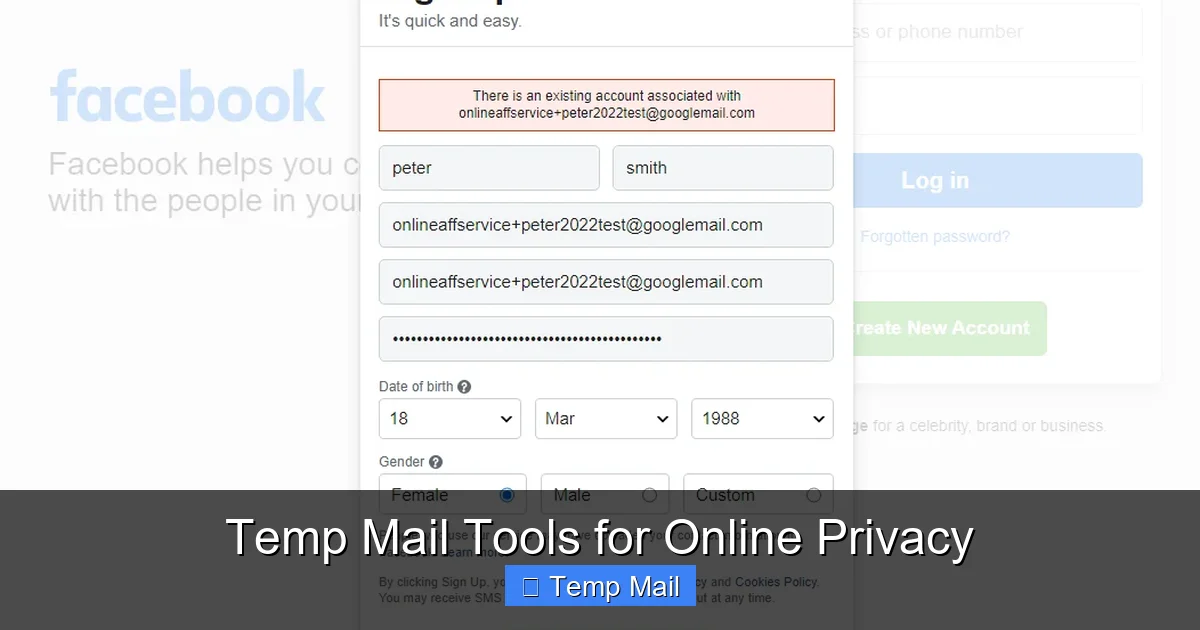
    Can I use a temporary mailbox for account recovery on important sites?

    Absolutely not. This is the most critical rule. Since the inbox and address expire permanently, you would be locked out of the account forever when you need to reset your password. Only use permanent, accessible email addresses for any account you value.

    Do temporary mail services support file attachments?

    Many do, including top services like Temp-Mail and Guerrilla Mail. However, there are often size limits (e.g., 10-25MB). Always check the service’s help/FAQ page to confirm attachment support before relying on it for a download.

    Why would I need a temporary email if I have a regular one?

    Your regular email is for your identity—friends, family, work, important accounts. A temporary email is for everything else. It protects your primary inbox from spam, prevents data breaches from linking to your real identity, and lets you access one-time content without long-term commitment or marketing lists.

  • Temporary Email for Safe Online Trials

    Temporary Email for Safe Online Trials

    Temporary email services provide a simple, powerful shield for your primary inbox when signing up for online trials, downloads, or unfamiliar websites. They effectively prevent spam, marketing emails, and potential data leaks by giving you a short-lived, anonymous address. This allows you to explore new software, services, or content offers confidently, without compromising your personal or professional contact information.

    Key Takeaways

    • Spam Prevention: Temporary emails act as a firewall, capturing unsolicited marketing emails and keeping your main inbox clean.
    • Privacy Protection: They shield your real identity and contact details from websites you don’t fully trust or plan to use long-term.
    • Risk-Free Testing: You can evaluate software trials, streaming services, or platforms without commitment or financial risk.
    • No Long-Term Clutter: The addresses self-destruct, eliminating the need to manually unsubscribe from unwanted mailing lists later.
    • Simple & Instant: Creating a disposable inbox takes seconds, requires no password, and is completely free on most platforms.
    • Cost-Effective: It’s a zero-cost tool for maintaining digital hygiene and protecting your primary email’s reputation.
    • Control Over Digital Footprint: You decide which interactions are tied to your permanent identity and which remain anonymous.

    [FEATURED_IMAGE_PLACEHOLDER]

    Your Inbox, Your Castle: Why Trials Need a Moat

    Let’s be honest. How many times have you wanted to try a new app, download a free e-book, or access a “freemium” online tool, only to hit the sign-up wall? That wall is the email field. You know the drill: provide your email, create a password, and suddenly you’re on a mailing list you never wanted. Your primary inbox becomes a dumping ground for “20% off” promotions and newsletters you’ll never read. What if there was a way to bypass this, to test-drive a service without handing over the keys to your digital castle? Enter the temporary email, your ultimate tool for safe online trials.

    Think of your main email address as your home address. You wouldn’t give it to every random vendor at a street fair, right? You’d use a P.O. box or just say “no thanks.” A temporary email is exactly that: a digital P.O. box for the internet’s street fair. It’s a short-lived, anonymous inbox designed for one purpose: to receive a single verification email or link and then vanish without a trace. For anyone looking to explore the vast world of online offers without selling their soul (or their inbox) to a marketing database, this is nothing short of revolutionary.

    What Exactly Is a Temporary Email? The Disposable Inbox Explained

    A temporary email service, also called a disposable or throwaway email, is a web-based platform that generates a random email address for you to use instantly. There’s no registration, no password, no personal details required. You visit the site, it gives you an address like [email protected], and you use that address wherever an email is needed. That’s it.

    Temporary Email for Safe Online Trials

    Visual guide about Temporary Email for Safe Online Trials

    Image source: atempmail.com

    The Mechanics: How It Works in 60 Seconds

    The process is beautifully simple. You navigate to a provider’s website. The homepage automatically displays a freshly generated email address for you. Next to it, there’s a “Copy” button and a large, empty inbox window waiting for mail. You copy that address, paste it into the sign-up form for the trial you want, and submit. You then switch back to the temporary email tab. Within seconds, if the service sends a verification email, it will appear right there in that inbox. You click the link or copy a code, complete the trial sign-up, and you’re done. You can close the tab. The inbox and its address will typically auto-delete after a set period—often 10 minutes to a few hours—or after you manually delete it.

    Core Features: What Makes It “Temporary”

    What separates this from a regular free email account? Several key features define the “temporary” nature:

    • No Account Creation: You don’t create a persistent account. The inbox is tied to the browser session or a randomly generated ID, not to you.
    • Ephemeral Lifespan: Inboxes have a countdown. Once the timer hits zero, the address and all contained emails are purged from the server forever.
    • No Forwarding: Generally, these services do not forward emails to your real address. They are a final destination, not a relay.
    • Public Inboxes (Sometimes): On some services, anyone with the exact address can view the inbox. This is why you should never use a temp mail for anything truly sensitive like banking or password resets.
    • Ad-Supported Model: Most reputable services are free because they display ads on their interface. You’re the product, but your data isn’t being sold—it’s being deleted.

    The Unbeatable Benefits: Why Your Future Self Will Thank You

    Using a temporary email for online trials isn’t just a trick; it’s a best practice for digital hygiene. The benefits stack up quickly, creating a cleaner, safer, and more controlled online experience.

    Temporary Email for Safe Online Trials

    Visual guide about Temporary Email for Safe Online Trials

    Image source: temporary-email.net

    Benefit 1: The Spam Sieve

    This is the most obvious and immediate benefit. That “free webinar” you signed up for? That “50% off your first order” from a store you browsed once? They all live and die with your temporary address. When the trial period ends and the company’s marketing automation kicks in, their emails go to an inbox that no longer exists. Your primary email remains pristine, only receiving newsletters you genuinely signed up for and communications from people and businesses you trust. It’s a proactive spam filter that works before the spam even arrives.

    Benefit 2: A Cloak of Privacy

    Every website you visit collects data. Your email address is a primary key to your digital identity. It can be used to track your activity across sites, build a profile of your interests, and even be involved in data breaches. By using a disposable address for low-stakes interactions, you sever that direct link. You are testing a service anonymously. If that service suffers a data breach (a sad reality), the leaked database contains [email protected], not [email protected]. Your privacy bubble remains intact.

    Benefit 3: Zero Commitment, Zero Guilt

    Ever signed up for a 7-day trial, forgot to cancel, and been charged? It happens. With a temporary email, the trial account is essentially disconnected from your real identity from the start. If you forget to cancel, the service will email your temp address, which you won’t see. The charge might still hit your card if you provided it, but you won’t be plagued by “Your subscription is active!” emails forever. It reduces the psychological friction of trying new things. You can click “Start Free Trial” with a light heart, knowing there’s no long-term digital entanglement.

    Benefit 4: Clean Up Your Digital Clutter

    How many unused accounts are floating around the internet, tied to your email? Each one is a tiny anchor of digital clutter. By using disposable emails for trials, you prevent these accounts from ever being firmly anchored to you. They exist in a temporary limbo. When the temp inbox dies, so does the easy access to that account. This encourages you to only maintain accounts for services you truly value, leading to a more intentional digital footprint.

    Perfect Use Cases: When to Reach for a Disposable Inbox

    Not every situation calls for a temporary email, but for specific scenarios, it’s the perfect tool. Here’s a practical guide on when to use one.

    Temporary Email for Safe Online Trials

    Visual guide about Temporary Email for Safe Online Trials

    Image source: northstar.church

    Scenario 1: Software & SaaS Trials

    This is the classic use case. You want to test Photoshop, a project management tool like Asana, a CRM, or a video editor. You need an email to get the download link and license key. Use a temp email. You get the software, test it for the trial period, and if you don’t like it, you walk away with no lingering emails from “Adobe Creative Team” in your primary inbox.

    Scenario 2: Accessing Gated Content

    Many blogs, research sites, and publishers gate premium articles, whitepapers, or templates behind an email sign-up. “Download our free ebook on SEO by entering your email!” If the content seems valuable and from a reputable source you might want to hear from again, use your main email. If it’s a one-off from a site you’ve never heard of, use a disposable address. Get the PDF, and never hear from them again.

    Scenario 3: Forum or Community Registration

    Want to ask a question on a niche forum or join a Discord server that requires email verification? A temporary email is perfect. It gets you past the gatekeeper for that single interaction without exposing your identity to the entire community’s database (which could be hacked or sold).

    Scenario 4: One-Time Discounts & Coupons

    See a “Get 10% off your first order!” pop-up that requires an email? If you plan to make a single purchase from that store, use a temp address to snag the code. You’ll get the discount, and the store’s subsequent promotional emails will vanish into the void.

    Scenario 5: Testing Website Sign-Ups & Features

    Are you a developer, QA tester, or just curious? You can use temporary emails to quickly create multiple test accounts on a platform you’re building or evaluating. It’s a huge time-saver and keeps your personal email free of test notifications.

    When NOT to use it: Never use a temporary email for critical, long-term accounts: your bank, primary cloud storage (Google Drive, iCloud), social media profiles, or any account where password recovery is essential. If the inbox disappears, you lose access forever.

    Choosing Your Shield: Comparing Temporary Email Services

    Not all temp mail providers are created equal. While the core function is the same, nuances in usability, privacy policy, and lifespan matter. Here’s what to look for.

    Key Selection Criteria

    • Inbox Lifespan: How long does the inbox last? 10 minutes? 1 hour? 1 day? For most trials, 1-2 hours is plenty to receive and click the verification link. Choose based on your expected response time.
    • Browser-Based vs. Extension: Most are simple websites. Some offer browser extensions (like for Chrome or Firefox) that generate a temp address with one click from your toolbar, which is incredibly convenient.
    • Custom Domain Options: Some services offer multiple domain options (e.g., @tempmail.com, @dispostable.com). If a site blocks known temp mail domains, switching to a different provider’s domain can sometimes bypass that block.
    • Privacy Policy: Read it. Do they log IP addresses? Do they claim any right to the emails? Reputable services explicitly state they do not monitor, store, or sell the content of emails and purge everything automatically.
    • User Interface: Is it clean and fast, or cluttered with aggressive ads? A clean interface makes it easier to spot that crucial verification email.

    Temp-Mail.org: A veteran in the space. Offers a clear interface, multiple domain choices, and a browser extension. Inboxes typically last 2 hours.

    10MinuteMail.com: The original, famous for its 10-minute countdown timer. It’s brutally simple and fast. Perfect for extremely quick verifications.

    Guerrilla Mail: Offers a slightly longer 1-hour inbox and the ability to even send a reply from the disposable address (a rare feature).

    DropMail.me: Provides a unique feature: it can generate a new random address every time you refresh, and you can “extend” the inbox time if needed.

    Mailinator (Public Inboxes): A different model. All inboxes are public by default. Anyone who guesses or knows the address can see the emails. It’s fast and requires no tab opening, but you must never use it for anything sensitive. Use only for truly public, low-risk verifications.

    Debunking Myths: Safety, Legality, and Limitations

    Temp mail services have a reputation. Let’s separate fact from fiction.

    Myth 1: “It’s Illegal or Unethical”

    This is false. There is no law against using a disposable email address. It is a standard tool for privacy. The ethical question depends on intent. Using it to sign up for a free trial as intended is perfectly ethical. Using it to fraudulently obtain paid services, evade bans, or send spam is unethical and often violates the website’s Terms of Service, which could get your trial account suspended.

    Myth 2: “It’s Insecure and Hackers Will Get My Data”

    The security model is different. The data in a temporary inbox is, by design, not sensitive. You are not sending passwords or financial data through it. The risk is that the service itself could be compromised. But since emails are auto-deleted and no personal data is collected during sign-up, a breach would yield minimal useful information—mostly random verification links for trials that are already expired. Compare that to using your primary email, which, if breached, gives attackers a master key to reset passwords on all your other accounts.

    Myth 3: “Websites Can Always Block Them, So They’re Useless”

    It’s true that many sophisticated websites maintain lists of known disposable email domains and block them at sign-up. This is a cat-and-mouse game. For every domain that gets blocked, new services pop up with new domains. If you encounter a block, your strategy should be: 1) Try a different temp mail provider (different domain). 2) If it still blocks, you may need to use your real email for that specific service. It doesn’t make them useless; it just means you might need to switch providers for that one site.

    Myth 4: “I Can Use It for Important Accounts”

    Do not do this. The fundamental limitation is impermanence. If you use a temp email to sign up for a cloud service and later need to reset your password, the reset email will go to an inbox that has vanished. You will be permanently locked out. Temporary email is for temporary interactions only.

    Best Practices: Mastering the Art of the Disposable Trial

    To get the most out of this tool, follow these practical tips.

    1. Keep Your Main Email Sacred

    Establish a firm rule: your primary email is for family, close friends, your bank, your employer, and services you are committed to for the long haul (like your primary cloud storage or social media). Everything else is temp mail territory. This mental boundary is the first step to digital organization.

    2. Have a Go-To Provider Bookmarked

    Don’t search for “temp email” every time. Find 1-2 services you like (e.g., Temp-Mail and Guerrilla Mail) and bookmark them. Even better, install their browser extension. One click and you have an address ready to paste.

    3. Act Quickly on Verification Emails

    Remember the inbox’s countdown timer! Once you request a trial, switch to the temp mail tab immediately. Verification links often expire in 15-30 minutes. Don’t get distracted and miss your window.

    4. Don’t Overcomplicate It

    You don’t need to remember the temp address. You don’t need a password. The whole point is to use it and forget it. Copy the address, paste it, and let the service handle the rest. No note-taking required.

    5. Use It for Downloadable Assets Too

    It’s not just for sign-up forms. If a site asks for an email to download a zip file, template, or software installer, use temp mail. You get the asset, and they get a dead-end address for their drip campaign.

    6. Combine with a Password Manager

    If you’re signing up for a trial you *might* want to keep, use your password manager to generate a strong, unique password for that trial account. Store the login details in your manager. If you decide to convert the trial to a paid subscription later, you already have the credentials. If you don’t, you can delete the entry. The temp email was the gateway, but the real security comes from unique passwords.

    The Future of Privacy: Temporary Email in a Tracking World

    As online tracking and data collection become more pervasive, tools that offer anonymity and control will only grow in importance. Temporary email is a simple, elegant solution to a very modern problem: the compulsory exchange of personal data for basic digital access. It embodies the principle of data minimization—giving away only what is absolutely necessary for the task at hand. While it won’t solve all privacy issues, it is a highly effective, low-effort tactic in your overall privacy toolkit. It reclaims your attention by preventing unwanted emails and reduces your attack surface by limiting the number of databases that contain your primary email address. In an era of constant connectivity, the ability to be temporarily untraceable is a form of digital self-defense.

    Conclusion: Embrace the Ephemeral for a Cleaner Digital Life

    Navigating the internet doesn’t have to mean surrendering your inbox to a lifetime of promotional noise. The humble temporary email is a deceptively powerful ally. It’s the bouncer for your digital club, turning away unwanted guests before they even enter. By adopting the habit of using a disposable address for every online trial, download, or gated content offer, you take immediate, tangible control over your privacy and your attention. You stop the spam before it starts, you protect your identity from unnecessary exposure, and you maintain a clean, meaningful primary inbox. The next time you see that enticing “Start Free Trial” button, pause. Grab a temporary email. Click the button. Explore with confidence. Your future, uncluttered inbox will thank you for it.

    Frequently Asked Questions

    Is using a temporary email for free trials legal?

    Yes, it is completely legal to use a disposable email address. There are no laws against it. It is a standard privacy tool. However, it may violate the specific Terms of Service of some websites, which could result in that particular trial account being suspended if discovered.

    Are temporary email services safe from hackers?

    They are safe for their intended, limited purpose. Since you are not using them for sensitive communications (like banking) and no personal data is collected when you create the inbox, the potential damage from a hack is minimal. The risk is primarily that a hacker could view the specific verification emails in a public inbox before you do, but these links are usually single-use and time-sensitive.

    What happens if I need to reset the password for an account I signed up with a temp email?

    You will be unable to reset the password. The reset email will be sent to the temporary inbox, which will have been deleted. This is why you must only use disposable emails for services you do not intend to keep long-term or for which you use a unique password stored in a password manager. For any account you wish to maintain, always use your permanent email.

    How long do temporary emails actually last?

    It varies by provider. Common lifespans are 10 minutes, 1 hour, or 2 hours from the moment the inbox is generated. Some services allow you to extend the time manually. Always check the countdown timer on the service’s page so you know how long you have to retrieve the verification email.

    Can a website tell I’m using a temporary email?

    Yes, easily. They maintain lists of domains from known disposable email providers. When you enter an address like [email protected], their system can flag it and block the sign-up. This is why having a few different provider options can help you bypass these blocks.

    What’s the main downside of using disposable emails?

    The primary downside is the lack of permanence and control. You cannot access the inbox later. If you forget to note down a confirmation code or important detail from an email, it’s gone forever. This makes them unsuitable for any important, long-term, or recovery-dependent accounts. They are a tool for one-time, low-stakes interactions only.

  • Temp Email for Social Media Signups

    Temp Email for Social Media Signups

    Temp email services are a powerful tool for signing up to social media platforms without using your personal or primary email address. They act as a disposable shield, preventing spam, protecting your identity, and keeping your main inbox clean and secure. This simple strategy is ideal for one-time signups, testing new platforms, or anyone prioritizing digital privacy.

    Key Takeaways

    • Anonymity First: A temporary email completely hides your real email address from social media platforms, marketers, and potential data breaches.
    • Spam Prevention: By using a disposable address, all promotional and unwanted emails are sent to a inbox that auto-deletes, keeping your primary inbox spam-free.
    • Enhanced Security: It minimizes the risk of your primary email being compromised in a data breach linked to a social media site.
    • Simplicity & Speed: Creating a temp email takes seconds, requires no registration, and is ready to use immediately for signups.
    • No Long-Term Commitment: These inboxes are designed to be temporary, typically expiring after a set period or upon closing the browser, leaving no digital footprint.
    • Best Practice Tool: It’s best reserved for non-critical, one-time, or low-trust social media signups, not for accounts you need to recover long-term.
    • Service Selection Matters: Not all temp mail providers are equal; choose reputable ones with reliable inbox display and adequate expiration times for your needs.

    Introduction: Why Your Email Address Matters More Than You Think

    You’re scrolling through your favorite social media feed and see an ad for a new, intriguing platform. You click, you’re interested, and you go to sign up. The first hurdle? An email address. You type in your primary Gmail, Outlook, or Yahoo address without a second thought. But have you ever paused to consider what happens to that email address after you hit “Sign Up”?

    That simple string of characters is more than a login key; it’s a gateway to your digital identity. It becomes a product, sold and traded in data marketplaces. It’s targeted by relentless marketing campaigns. It’s a prime target for hackers if that social platform suffers a breach. This is where the strategic use of a temp email for social media signups transforms from a tech-savvy trick into a essential privacy practice. It’s not about doing something shady; it’s about protecting your main communication channel from the noise and risks of the social web.

    In this comprehensive guide, we’ll dive deep into the world of temporary email services. We’ll explore exactly how they work, why they are a perfect match for the volatility of social media platforms, and how you can use them effectively and safely. From step-by-step tutorials to a frank discussion of limitations, we’ll cover everything you need to make informed decisions about your online privacy.

    What Exactly is a Temporary Email Service?

    Before we connect it to social media, let’s demystify the tool itself. A temporary email service (also called disposable email, throwaway email, or fake email) is a web-based platform that provides you with a random, functional email address for a short period. This address can receive emails, but it cannot be used to send them (in most cases). The defining characteristic is its ephemeral nature.

    Temp Email for Social Media Signups

    Visual guide about Temp Email for Social Media Signups

    Image source: 20294495.fs1.hubspotusercontent-na1.net

    How Do They Work? The Mechanics of Disposable Inboxes

    When you visit a site like Temp-Mail.org, 10MinuteMail, or Guerrilla Mail, the service instantly generates a unique email address for you, such as [email protected]. This address is tied to a private, temporary inbox on their servers. The inbox is accessible only through a specific URL or a session-based window on your browser. You copy this address and paste it into the social media signup form. Any verification or welcome emails sent to that address appear in the temporary inbox, which you can read right there on the temp mail site.

    Once the inbox’s time expires (often 10 minutes to 1 hour, sometimes 24 hours) or you close the browser tab, that address and all its emails are permanently deleted from the server. There is no password, no recovery, and no way to access it again. It simply vanishes.

    Types of Temporary Email Services

    Not all temp mail is created equal. Understanding the two primary types helps you choose the right tool:

    • Fully Disposable (Session-Based): This is the classic model. The email address and inbox exist only for the duration of your current browser session. Close the tab, lose the inbox. Services like 10MinuteMail (the original) and many others operate this way. It’s the ultimate in anonymity but offers zero persistence.
    • Semi-Permanent (Time-Based): These services provide an inbox that lasts for a predefined period, such as 24 hours, 3 days, or even a week, without requiring you to stay on the page. You are often given a specific URL to return to that inbox within the time window. This is useful for processes that might take longer, like waiting for a social media verification email that could be delayed. Examples include Temp-Mail.org (with options) and DropMail.

    Why Social Media Signups Are the Perfect Use Case

    Now, let’s connect the dots. Social media platforms are uniquely suited for the temp email strategy. They present a perfect storm of privacy-invading practices that a disposable address directly counteracts.

    Temp Email for Social Media Signups

    Visual guide about Temp Email for Social Media Signups

    Image source: no-cache.hubspot.com

    The Spam & Marketing Onslaught

    Think about the terms of service you blindly accept. You are almost certainly granting the platform permission to market to you, share your data with “partners,” and send endless notifications. Even if you meticulously adjust your notification settings, promotional emails for new features, “partner” offers, and “you might know” suggestions are a constant drip. By using a temp email, you create a firebreak. All that marketing collateral is funneled into an inbox that self-destructs, leaving your real inbox serene.

    Data Harvesting and Identity Profiling

    Your email address is a primary key in the vast databases of data brokers. The more places it appears, the more detailed a profile can be built about your interests, location, and online behavior. Using a unique, disposable address for each new or untrusted social platform fragments that profile. It makes it much harder for aggregators to connect your activity on “FitnessAppSocial” with your activity on “ProfessionalNetworkX” using your email as the common thread.

    The Inevitable Data Breach

    This is the most critical reason. Major social media platforms are colossal targets for hackers. When (not if) a breach occurs, stolen user data almost always includes email addresses. If you used your primary email for a breached platform, that address is now in the hands of criminals. It can be used for phishing attacks, credential stuffing (trying that email/password combo on other sites), or sold on the dark web. A temporary email used for a single signup means when that platform is breached, nothing of value is exposed. The compromised address is already worthless and inactive.

    Testing and Curiosity Without Commitment

    How many times have you wanted to quickly check out a new social network a friend recommended, only to be deterred by the signup wall? A temp email removes that friction. You can create an account, explore for 10 minutes, and leave without leaving a permanent trace or cluttering your real inbox with “welcome” sequences you’ll never read.

    Step-by-Step: How to Use a Temp Email for Social Media Signups

    Using this tool is remarkably simple, but doing it correctly ensures it works as intended. Here is a practical, foolproof guide.

    Temp Email for Social Media Signups

    Visual guide about Temp Email for Social Media Signups

    Image source: blog.choto.co

    Step 1: Choose and Open Your Temp Mail Service

    Do this before you start the social media signup process. Open a new browser tab and navigate to a trusted temp mail provider. For beginners, I recommend starting with Temp-Mail.org or Guerrilla Mail because of their clear interfaces and slightly longer (but still temporary) inbox lifetimes. Avoid obscure sites with lots of ads; they may be less reliable or secure.

    Step 2: Copy the Generated Email Address

    The service will immediately generate an address for you. It will look something like [email protected]. Click the copy button next to it or highlight and copy it manually. Do not close this browser tab yet!

    Step 3: Paste and Complete the Social Media Signup

    Go to the social media platform’s signup page. Paste the temporary address into the email field. Fill in any other required details (a username can also be disposable—use their random suggestion!). Proceed through the steps. When you hit the button to send a verification email, switch back to your temp mail tab.

    Step 4: Retrieve the Verification Code

    Refresh the temp mail inbox (some update automatically). You should see an incoming email from the social platform. Click on it to open it. Locate the verification link or code. Copy the code or click the link (which may open in a new tab). Return to the signup page and enter the code or complete the verification.

    Step 5: Log In and Explore (Temporarily)

    You are now “signed up.” You can log in to the new social account using the temp email as your username. Explore the platform. Remember, your access to the account is tied to your access to that email address. If you lose the temp inbox, you cannot reset the password for this social account. Therefore, treat this account as a temporary guest pass.

    Step 6: Secure or Abandon the Account

    If you decide you want to keep the social media account long-term, you must go into the platform’s account settings and change the primary email address to your real, permanent one before the temp inbox expires. This is a crucial step. If you don’t do this, you will be locked out as soon as the temp mail expires. If you’re just browsing and leaving, simply close the tabs. The temp email and associated social account will become inaccessible.

    The Flip Side: Limitations and Potential Pitfalls

    A temp email is a powerful tool, but it’s not a magic bullet for every situation. Understanding its limitations is key to using it wisely and avoiding frustration.

    Account Recovery Becomes Impossible

    This is the biggest drawback. Social media platforms rely on your email for password resets, security alerts, and account recovery if you’re locked out. If your registered email is a temp address that has expired, you have permanently lost access to any recovery method. The account is effectively dead. This is why you should never use a temp email for a social media account you intend to keep for more than a few days without immediately changing it to a permanent address.

    Some Platforms Actively Block Them

    Many major platforms (like Facebook, Instagram, Twitter/X, LinkedIn) have sophisticated algorithms that detect and block known disposable email domains. If you try to sign up with an address from a blocked provider, you’ll get an error message instantly. This is a cat-and-mouse game; new temp mail domains pop up, and platforms add them to blocklists. If you encounter a block, you may need to try a different provider or a less common domain from the same service.

    Not for Financial or Critical Identity Platforms

    Never use a temporary email for any service that involves financial transactions, government IDs, primary banking, or long-term identity verification (like certain professional licensing boards). The risk of being locked out far outweighs any short-term privacy benefit. Social media, by its nature, is generally lower-stakes, making it an ideal candidate.

    Two-Factor Authentication (2FA) Complications

    If you enable 2FA on a social account registered to a temp email, and your 2FA method is email-based (sending a code to your registered email), you will lose access when the temp inbox expires. Always use an authenticator app (like Google Authenticator or Authy) for 2FA on accounts linked to a temp email, as the app is tied to your phone, not your email address.

    Best Practices and Pro Tips for Safe Usage

    To get the most out of your temp email for social media signups while avoiding common mistakes, follow these best practices.

    The Golden Rule: Change It or Lose It

    As stated repeatedly: if you want to keep the social media account, change the email to your permanent one immediately after verification and before the temp inbox expires. Set a mental timer or calendar reminder. Do not procrastinate on this.

    Use a Different Temp Address for Each Platform

    Don’t reuse the same temporary email address for multiple social media signups. The whole point is to prevent cross-platform profiling. Generating a fresh, random address for each new platform maximizes your privacy segmentation.

    Choose Services with Clear Interfaces and Adequate Time

    For social media, you often need more than 10 minutes. You might not check the verification email immediately. Opt for services that offer at least a 1-2 hour window or a 24-hour option. A cluttered, ad-heavy interface can make it hard to find the verification email, so prioritize clean, user-friendly sites.

    Never Use for Primary Account Recovery

    This bears repeating. Do not list a temp email as your recovery email on an account that matters. The recovery email should always be a permanent, secure address you control. The temp email is for the primary contact field only, and only on low-stakes platforms.

    Close the Tab to “Destroy” Evidence

    Once you’re done with a session-based temp mail, close the browser tab entirely. On some services, just navigating away might not fully clear the session from memory. Closing the tab ensures the server-side session is terminated and the address is marked for deletion.

    Have a Permanent Email Ready for the “Upgrade”

    Before you even start the signup with a temp address, be sure you know which of your real email addresses you will switch to if you decide to keep the social account. Have it copied to your clipboard or easily accessible to make the transition seamless.

    The Future of Privacy: Where Do Temp Emails Fit In?

    The digital landscape is constantly evolving. Increased regulation like GDPR and CCPA has given users more control, but the fundamental business model of many social platforms—advertising based on user data—remains. This ensures the demand for privacy tools like temporary email will only grow.

    Rise of Privacy-Focused Platforms

    We are seeing the emergence of social networks built with privacy as a core tenet, not an afterthought. These platforms may not require an email at all, using phone numbers or decentralized identifiers instead. However, for the vast majority of existing dominant platforms, the email remains king, making temp mail a vital stopgap.

    Advanced Browser and OS Integrations

    The next frontier is deeper integration. Browsers like Safari and Firefox already have built-in “hide my email” features that generate unique, forwardable aliases for your real inbox. This is essentially a more sophisticated, permanent version of a temp email. We can expect this functionality to become standard, blurring the line between disposable and managed email aliases.

    The Arms Race Continues

    As temp mail services become more popular and sophisticated, social platforms will invest more in blocking them. We may see the rise of “stealth” temp mail providers that use constantly rotating domains or more human-like generation patterns to evade detection. The user’s best strategy will remain using reputable, well-maintained services and staying informed about which ones currently work with which platforms.

    Conclusion: Empowerment Through Simple Choices

    Signing up for a new social media platform should feel like an exciting opportunity to connect or explore, not a privacy gamble. By integrating the simple habit of using a temp email for social media signups, you reclaim a fundamental piece of your digital sovereignty. You build a moat around your primary inbox, you fragment your data profile, and you insulate yourself from the inevitable spam and security fallout that comes with the territory of social networking.

    This isn’t about being paranoid; it’s about being prudent. You lock your front door at night, you use a password manager, and you shred sensitive documents. Using a disposable email for non-essential signups is the digital equivalent of these sensible habits. It’s a low-effort, high-reward practice that anyone can adopt. Start today. Next time you see that “Sign up with email” button, take 15 seconds to open a temp mail tab, generate an address, and protect your real self from the digital crowd. Your future inbox—and your peace of mind—will thank you.

    Frequently Asked Questions

    Is using a temporary email for social media legal?

    Yes, using a temporary email service is completely legal. These services operate within the law, providing a communication tool. The legality pertains to how you use the account; the temp email itself is a legitimate privacy-enhancing technology.

    Are temporary email services safe and secure?

    Reputable temporary email services are generally safe for receiving non-sensitive verification emails. However, you should never use them for sending confidential information, as the inboxes are not encrypted like premium services. Always use well-known providers and avoid entering any personal data within the temp mail interface itself.

    What happens if I forget to change the email on a social account before the temp inbox expires?

    You will permanently lose access to that social media account. You will be unable to log in (as you may not remember the password) and cannot use the “forgot password” function, as the reset email will be sent to the expired, inaccessible temporary address. The account is effectively abandoned.

    Which temporary email service works best for social media signups?

    Services like Temp-Mail.org, Guerrilla Mail, and 10MinuteMail are reliable and commonly work for many platforms. However, because social networks constantly update their blocklists, the best service can vary. If one is blocked, simply try another. Look for services that offer a clear inbox display and at least a 1-hour retention window.

    Will using a temp email affect my ability to get friend suggestions or connect with real friends?

    No, it will not affect the core functionality of finding and connecting with people once you are logged in. Social media platforms use your activity, contacts (if uploaded), and algorithmic matching for suggestions, not your email address. The email is primarily for login, verification, and communication from the platform itself.

    Can I use a temporary email if I already have a social media account and want to add a login method?

    It is not recommended. Adding a temporary email as a secondary login or recovery method is risky. If you ever need to recover your account and the primary email fails, the temp email will be inaccessible, locking you out. Only use a temp email as the primary contact on accounts you intend to be temporary or will immediately upgrade to a permanent email.